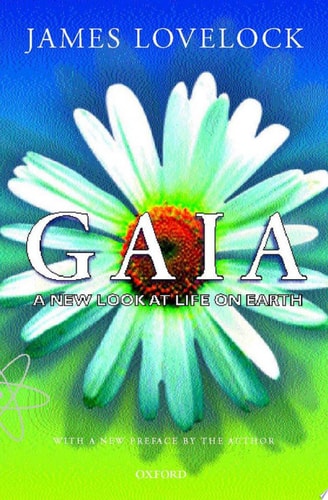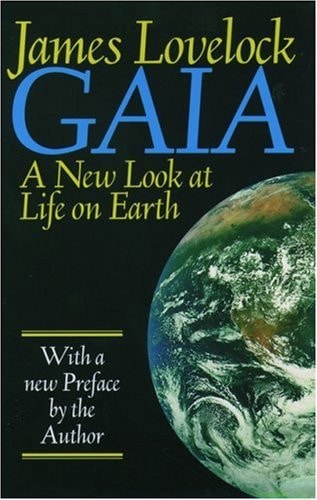
Gaia: The Practical Science of Planetary Medicine
0
0
As an Amazon Associate and affiliate partner, Menrva Books earns from qualifying purchases. Learn more
Author Description
James Lovelock is a world-renowned scientist and inventor whose work on detecting CFC's (chlorofluorocarbons) in our environment led him to develop a new theory about our planet. The Gaia Hypothesis posits that the Earth is alive-a self regulating organism in its own right. In his two other books on the subject, Lovelock set the record straight on the damage that CFC'c have done to ourplanet and its delicate balance of the interaction between life-forms. His theory has generated much controversy as it proposes that evolution is far from over and that humankind is no longer the be-all and end-all of that process.In this latest volume on the subject, Lovelock examines the health and future prospects of our ailing planet. Beautifully illustrated and presented, Healing Gaia does justice to a theory of this magnitude, while making it accessible to a wide audience of scientists and non-scientists alike. It represents the most comprehensive analysis of our origins, our reasons for existence, and our likely future.
Menrva's Summary
THE THESIS
This work investigates the core question of whether Earth functions as a self-regulating, living organism and how human activity impacts its planetary health. James Lovelock, a scientist and inventor known for his work on atmospheric CFCs, utilizes his Gaia hypothesis to frame the planet as a complex, homeostatic system. He argues that life and the physical environment evolve together, challenging traditional anthropocentric views of evolution and survival. The text provides a comprehensive analysis of the planet's current state and its potential trajectory in the face of environmental degradation.
THE SCOPE MAP
What You Will Find
- An examination of the Gaia hypothesis as a framework for planetary medicine.
- Analysis of the interaction between biological life-forms and the physical environment.
- Discussion on the long-term health and future prospects of the Earth's climate systems.
- Scientific perspectives on the role of humanity within the broader evolutionary process.
THE AUTHORITY PERSPECTIVE
Experts and readers recognize this text as a significant contribution to environmental science that bridges the gap between technical theory and public understanding. The prose is noted for its accessibility, making complex systems theory understandable for both scientific professionals and the general public.
Page Count:
192
Publication Date:
2001-01-18
Publisher:
Oxford University Press
ISBN-10:
0195216741
ISBN-13:
9780195216745
Non-Fiction
Science
Nature
Gaia hypothesis
Biosphere
Environment
Ecology
Geobiology
Earth Science
Community Tags
Similar Books