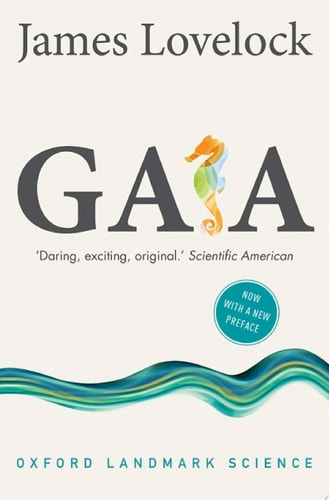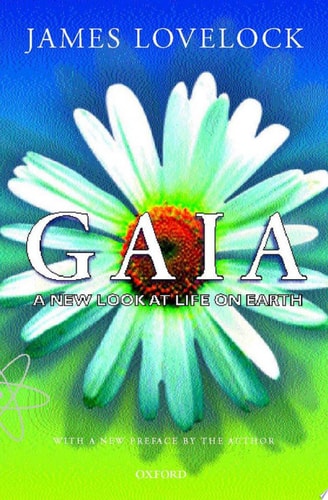
Gaia: A New Look at Life on Earth
0
0
As an Amazon Associate and affiliate partner, Menrva Books earns from qualifying purchases. Learn more
Author Description
In this classic work that continues to inspire its many readers, James Lovelock deftly explains his idea that life on earth functions as a single organism. Written for the non-scientist, Gaia is a journey through time and space in search of evidence with which to support a new and radically different model of our planet. In contrast to conventional belief that living matter is passive in the face of threats to its existence, the book explores the hypothesis that the earth's living matter-air, ocean, and land surfaces-forms a complex system that has the capacity to keep the Earth a fit place for life.Since Gaia was first published, many of Jim Lovelock's predictions have come true, and his theory has become a hotly argued topic in scientific circles. Here, in a new Preface, Lovelock outlines his present state of the debate.
Menrva's Summary
THE THESIS
The book investigates the hypothesis that the Earth functions as a self-regulating, complex system where living organisms and their inorganic environment evolve as a single, unified entity. James Lovelock, an independent scientist and atmospheric researcher, draws upon his background in chemistry and biology to challenge the traditional view of a passive planet. He presents a framework where the biosphere actively maintains the chemical and physical conditions necessary for life to persist, effectively treating the Earth as a living organism known as Gaia.
THE SCOPE MAP
What You Will Find
- The Gaia hypothesis framework regarding atmospheric regulation
- Analysis of chemical interactions between ocean, air, and land surfaces
- Historical context of planetary evolution and homeostasis
Scope Limits
- Does not provide a comprehensive textbook-level survey of all biological processes
- Does not focus on specific political policy recommendations for climate change
THE AUTHORITY PERSPECTIVE
Experts recognize this work as a foundational text that shifted the discourse in environmental science and systems theory. Readers frequently note the accessible prose, which translates complex atmospheric and biological concepts for a general audience.
Page Count:
176
Publication Date:
2000-01-01
Publisher:
Oxford University Press
ISBN-10:
0192862189
ISBN-13:
9780192862181
Science
Biosphere
Earth Science
Philosophy of
Gaia hypothesis
Ecology
Biology