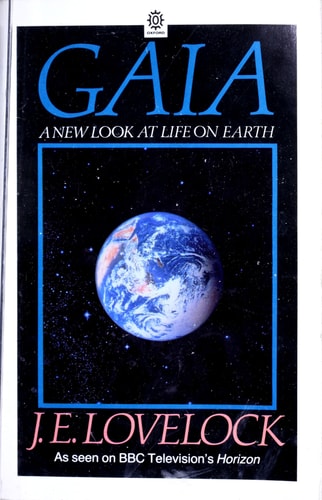
Gaia: A New Look at Life on Earth
0
0
As an Amazon Associate and affiliate partner, Menrva Books earns from qualifying purchases. Learn more
Author Description
The Gaia hypothesis, first put forth in the mid-1960s, and published in book form in 1975, has had a radical effect on scientific views of evolution and the environment. Fiercely debated by biologists, chemists, and cyberneticists, it has been the subject of numerous conferences and a BBC special which aired on public TV's "Nova" series. Green Peace and other environmental groups have embraced the theory, and Isaac Asimov incorporated it into two his science fiction novels. Now, James Lovelock provides a new preface to his his seminal work, confronting his critics, and, addressing the current advances in science and technology, demonstrates how his predictions have already begun to be fulfilled.According to the Gaia hypothesis, the environment does not coincidentally support life on earth; rather the two interact much the way a bird and its nest interact. "The Earth's living matter," writes Lovelock, "air, oceans, and land surface form a complex system which can be seen as a single organism and which has the capacity to keep our planet a fit place for life." This revolutionary book offers the clearest explanation of the interaction of life and the environment.
Menrva's Summary
THE THESIS
The Gaia hypothesis proposes that the Earth's living matter, air, oceans, and land surface form a complex, self-regulating system that maintains the conditions necessary for life. James Lovelock, a chemist and independent scientist, utilizes his background in atmospheric science and cybernetics to argue that the planet functions as a single, integrated organism. He presents a framework where life actively modifies its environment to ensure planetary habitability, challenging traditional views of evolution that treat the environment as a passive backdrop.
THE SCOPE MAP
What You Will Find
- Systems theory applied to planetary biology
- Analysis of atmospheric composition and chemical regulation
- Historical development of the Gaia hypothesis
- Discussion of feedback loops between biota and the physical environment
Scope Limits
- Does not provide a comprehensive history of all biological evolution
- Does not offer specific policy prescriptions for environmental management
THE AUTHORITY PERSPECTIVE
Experts recognize this work as a foundational text in systems ecology and environmental science. Readers frequently note the accessible yet provocative nature of the prose, which bridges the gap between specialized scientific inquiry and broader philosophical discourse.
Page Count:
176
Publication Date:
1989-01-01
Publisher:
Oxford University
ISBN-10:
0192860305
ISBN-13:
9780192860309
Science
Earth Planet
Biology
Biosphere
Gaia hypothesis
Earth Science
Ecology
Community Tags
Similar Books