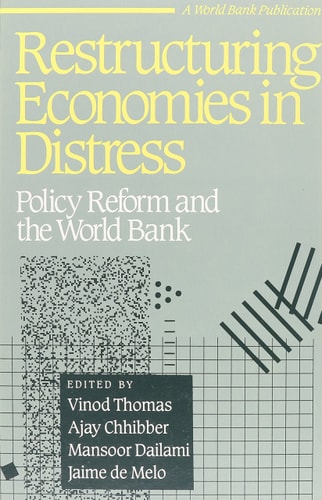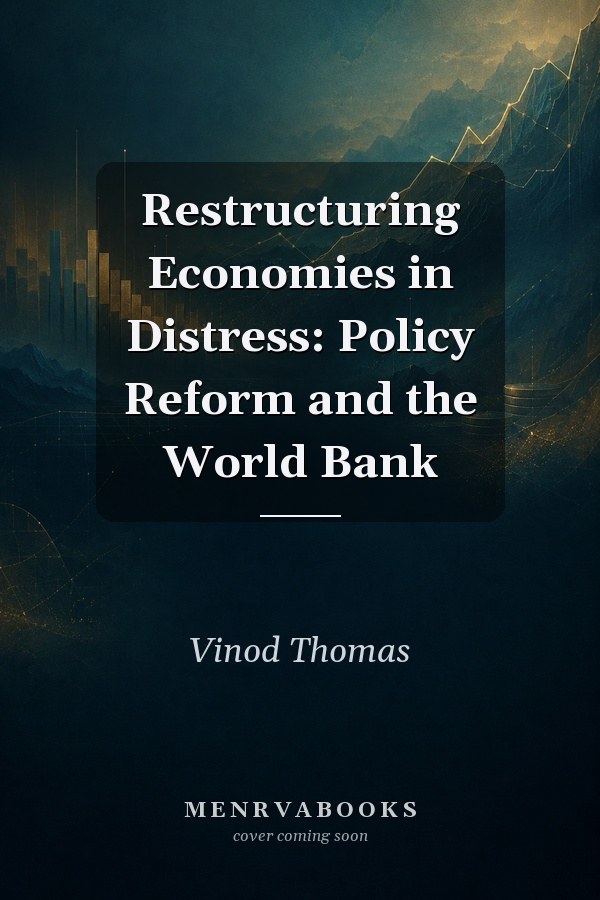
Restructuring Economies in Distress: Policy Reform and the World Bank
0
0
As an Amazon Associate and affiliate partner, Menrva Books earns from qualifying purchases. Learn more
Author Description
In 1980 the World Bank began structural adjustment lending to its member governments to support broad economic, institutional, and policy reforms. To examine how well this form of lending has worked, this volume brings together leading practitioners and scholars from the World Bank and other financial institutions as well as from government and academia. Their assessments, based on theoretical and practical experience, contribute to the ongoing debate about how best to bring about macroeconomic stability. Case studies of nine countries under adjustment explore how well they complied with loan conditions and how their economies performed before, during, and after adjustment.
Menrva's Summary
THE THESIS
This volume investigates the efficacy of structural adjustment lending programs initiated by the World Bank to foster macroeconomic stability and institutional reform in member nations. The authors, including Ajay Chhibber, Mansoor Dailami, and Vinod Thomas, aggregate expertise from international financial institutions, government agencies, and academic research to evaluate the outcomes of these policy interventions. By synthesizing theoretical frameworks with empirical data, the text provides a comprehensive assessment of how conditional lending influences national economic performance and long-term institutional development.
THE SCOPE MAP
What You Will Find
- Comparative analysis of structural adjustment programs implemented since 1980.
- Case studies covering nine distinct countries undergoing economic reform.
- Evaluation of compliance metrics regarding loan conditions and policy implementation.
- Assessment of macroeconomic indicators before, during, and after adjustment periods.
THE AUTHORITY PERSPECTIVE
Experts recognize this volume as a critical reference for understanding the historical application of World Bank conditionality. Readers frequently note the technical density of the prose, which serves as a foundational text for students and practitioners of international development economics.
Page Count:
58
Publication Date:
1995-01-01
Publisher:
World Bank
ISBN-10:
019521109X
ISBN-13:
9780195211092
Economics
Finance
World Bank
Developing Countries
Public Policy
International relations
Community Tags
Similar Books