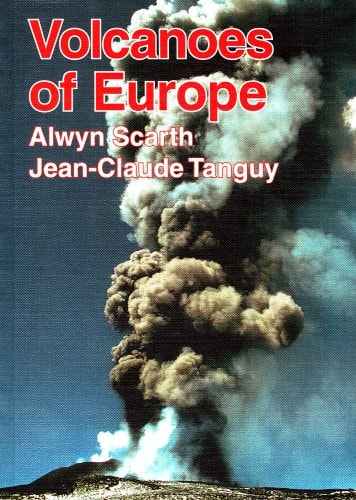
Volcanoes of Europe
0
0
As an Amazon Associate and affiliate partner, Menrva Books earns from qualifying purchases. Learn more
Author Description
Volcanoes have contributed in large part to the formation of the Earth's crust and atmosphere--and are intimately tied to the history of humanity. The most ancient civilizations of Europe have preserved the imprint of these spectacular and often terrifying phenomena. The explosion of Santorini, some 3600 years ago in the Aegean, undoubtedly inspired the Greek fables of Atlantis, the eruptons of Etna (Sicily) are the origin of the image of the forges of Cyclops and other myths, and the concept of Hades was linked to numerous volcanoes in the Mediterranean. Italy was the birthplace of the science of volcanology, and the Atlantic (Iceland and the Azores) volcanoes have given unrivalled opportunity for the study of volcanic islands recently formed. This book, both reference and guide, presents the causes, initiation, and growth of these volcanoes against a background of their environmental aspects and contemporary activity. Special attention is given to the impact on the people who live on or around them. The volcanoes of and volcanic activity in the Mediterranean basin, the Atlantic, and France and Germany are described in clear prose with a minimum of technical jargon. A glossary of volcanic terms used in the local languages is included, and the book is well illustrated with black and white photographs and maps, and an 8-page color insert.
Menrva's Summary
THE THESIS
This book investigates the geological origins, historical impact, and contemporary activity of European volcanoes to explain their profound influence on both the Earth's crust and human civilization. Alwyn Scarth and Jean-Claude Tanguy utilize their expertise in volcanology to synthesize scientific data with historical context. They argue that understanding these phenomena requires a dual focus on the physical mechanics of eruptions and the socio-environmental consequences for the populations residing in volcanic regions.
THE SCOPE MAP
What You Will Find
- Detailed geological analysis of volcanic activity in the Mediterranean basin, the Atlantic, France, and Germany.
- Historical and mythological accounts linking volcanic eruptions to ancient European civilizations and folklore.
- A comprehensive glossary of volcanic terminology translated across local European languages.
- Visual documentation including maps, black and white photographs, and an 8-page color insert.
THE AUTHORITY PERSPECTIVE
Experts and readers frequently highlight this work as a highly accessible reference that successfully bridges the gap between academic volcanology and general interest history. The text is noted for its clarity and lack of dense technical jargon, making it a foundational resource for those interested in the intersection of geology and human culture.
Page Count:
243
Publication Date:
2001-05-31
Publisher:
Oxford University Press
ISBN-10:
0195217543
ISBN-13:
9780195217544
Science
Volcanoes
Earth Science
Volcanology
Geology
Europe
Reference