Ancient Egypt
0
0
As an Amazon Associate and affiliate partner, Menrva Books earns from qualifying purchases. Learn more
Author Description
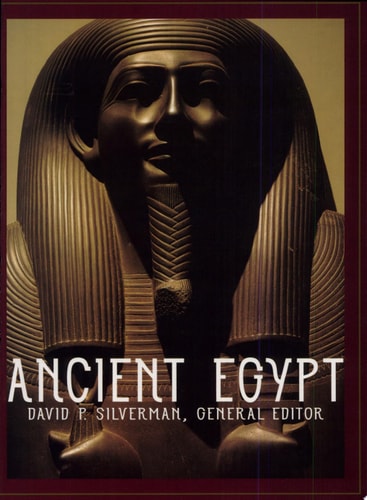
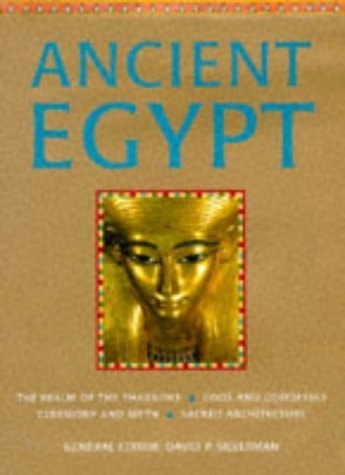
The ancient Egyptians lived in a remarkable culture that created some of the world's most beautiful art and architecture. It was a land where Pharaoh was the monarch of the entire world, the living emodiment on Earth of the god Horus, son of Osiris, ruler of the underworld. It was a culture that relied on the rising and falling of the Nile, but resided next to the Great Sahara, one of the hottest and driest deserts on the planet. Even today, the ancient civilization of Egypt--which produced the great pyramids, the riddle of the Sphinx, and the riches of Tutankhamum--exerts a strong hold on our imaginations.Now, in Ancient Egypt, eminent Egyptologist David P. Silverman and a team of leading scholars explore the cultural wealth of this civilization in a series of intriguing and authoritative essays based on the latest theories and discoveries. Illustrated with more than 200 superb color photographs, maps, and charts, Ancient Egypt illuminates the vivid and powerful symbolic images of this fascinating culture--from pyramids and temples to priests and rituals; from hieroglyphic writing to daily life by the Nile; and from temple carvings to the cult of the dead. Correcting the popular misconception of the Egyptians as a death-obsessed people, the book uses the most recent historical research and archaeological finds to illuminate the routines of daily life in royal, élite, and priestly circles, as well as at lower levels of society.We learn, for example, that despite the monochromatic appearance of most temple ruins today, in ancient times they would have been colorful, even gleaming structures; that the title "Pharaoh" derives from the Egyptian phrase per aa, which means "great house" and was originally a reference to the royal palace; that temples employed all manner of part-time and full-time personnel, from farmers and carpenters to scribes, jewellers, and keepers of livestock; and that Egyptian law viewed women as equal to men, and they could, in some cases, wield c
Menrva's Summary
THE THESIS
This work investigates the cultural, social, and political complexities of ancient Egypt to move beyond common misconceptions regarding its focus on death. David P. Silverman, a distinguished Egyptologist, leads a team of scholars in synthesizing recent archaeological findings and historical research. The book presents a comprehensive framework that examines the civilization through its art, architecture, daily routines, and religious structures to provide a nuanced understanding of Egyptian life.
THE SCOPE MAP
What You Will Find
- Analysis of social hierarchies ranging from royal and priestly circles to common laborers.
- Examination of architectural evolution, including the original aesthetic appearance of temples and pyramids.
- Insights into the role of women, legal systems, and the economic functions of temple personnel.
- Extensive visual documentation featuring over 200 color photographs, maps, and charts.
THE AUTHORITY PERSPECTIVE
Experts and readers alike recognize this volume as a highly accessible yet scholarly resource for understanding the multifaceted nature of Egyptian society. The text is frequently cited for its ability to balance academic rigor with clear, engaging prose suitable for both students and enthusiasts of history.
Page Count:
256
Publication Date:
1997-05-01
Publisher:
Oxford University Press
ISBN-10:
0195212703
ISBN-13:
9780195212709
Non-Fiction
History
Egyptology
Egypt - History
Archaeology
Community Tags
Other Editions(4)
Similar Books



Reader Comments
Share Your Thoughts
No comments yet. Be the first to share your thoughts!