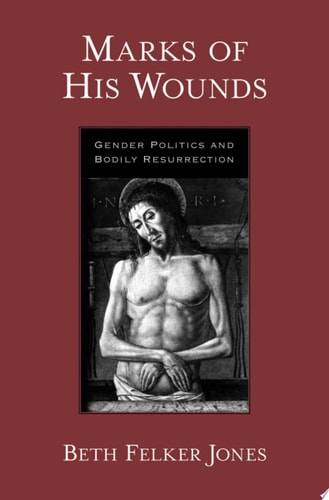
Marks of His Wounds: Gender Politics and Bodily Resurrection
0
0
As an Amazon Associate and affiliate partner, Menrva Books earns from qualifying purchases. Learn more
Author Description
It is a central tenet of Christian theology that we will be resurrected in our bodies at the last day. But we have been conditioned, writes Beth Felker Jones, to think of salvation as being about anything but the body. We think that what God wants for us has to do with our thoughts, our hearts, or our interior relationships. In popular piety and academic theology alike, strong spiritualizing tendencies influence our perception of the body. Historically, some theologians have denigrated the body as an obstacle to sanctification. This notion is deeply problematic for feminist ethics, which centers on embodiment. Jones's purpose is to devise a theology of the body that is compatible with feminist politics. Human creatures must be understood as psychosomatic unities, she says, on analogy with the union of Christ's human and divine natures. She offers close readings of Augustine and Calvin to find a better way of speaking about body and soul that is consonant with the doctrine of bodily resurrection. She addresses several important questions: What does human psychosomatic unity imply for the theological conceptualization of embodied difference, especially gendered difference? How does embodied hope transform our present bodily practices? How does God's momentous "yes" to the body, in the Incarnation, both judge and destroy the corrupt ways we have thought, produced, constructed, and even broken bodies in our culture, especially bodies marked by race and gender?Jones's book articulates a theology of human embodiment in light of resurrection doctrine and feminist political concerns. Through reading Augustine and Calvin, she points to resources for understanding the body in a way that coheres with the doctrine of the resurrection of the flesh. Jones proposes a grammar in which human psychosomatic unity becomes the conceptual basis for sanctification. Using gender as an illustration, she interrogates the difference resurrection doctrine makes for holiness. Because death has
Menrva's Summary
THE THESIS
How can the Christian doctrine of bodily resurrection be reconciled with feminist ethics to create a theology that affirms human embodiment? Beth Felker Jones, a theologian, argues that contemporary religious and secular thought often spiritualizes salvation at the expense of the physical body. By examining the psychosomatic unity of human nature, she proposes a framework that challenges historical denigrations of the body and offers a constructive approach to gendered difference and sanctification.
THE SCOPE MAP
What You Will Find
- A critical analysis of historical theological perspectives on the body, specifically focusing on Augustine and Calvin.
- A theological framework for understanding human beings as psychosomatic unities.
- An exploration of the intersection between resurrection doctrine and feminist political concerns.
- An investigation into how the doctrine of the Incarnation informs modern practices regarding race, gender, and bodily integrity.
THE AUTHORITY PERSPECTIVE
Scholars and theologians identify this work as a significant contribution to the dialogue between systematic theology and feminist ethics. Readers frequently note the academic density of the prose, which requires a foundational understanding of historical Christian doctrine to fully grasp the author's arguments.
Page Count:
168
Publication Date:
2007-04-12
Publisher:
Oxford University Press
ISBN-10:
0195309812
ISBN-13:
9780195309812
Philosophy
Religion
Feminist Theory
Christianity
Resurrection
Ethics
Religious Aspects
Theology
Feminist Theology
Community Tags
Other Editions(2)

Similar Books




Reader Comments
Share Your Thoughts
No comments yet. Be the first to share your thoughts!