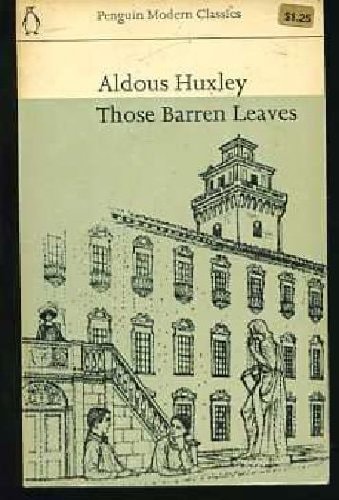
Those Barren Leaves
0
0
As an Amazon Associate and affiliate partner, Menrva Books earns from qualifying purchases. Learn more
Author Description
Aldous Huxley spares no one in his ironic, piercing portrayal of a group gathered in an Italian palace by the socially ambitious and self-professed lover of art, Mrs. Aldwinkle. Here, Mrs. Aldwinkle yearns to recapture the glories of the Italian Renaissance, but her guests ultimately fail to fulfill her naive expectations. Among her entourage are: a suffering poet and reluctant editor of the Rabbit Fanciers' Gazette who silently bears the widowed Mrs. Aldwinkle's desperate advances; a popular novelist who records every detail of her affair with another guest, the amorous Calamy, for future literary endeavors; and an aging sensualist philosopher who pursues a wealthy yet mentally-disabled heiress. Stripping the houseguests of their pretensions, Huxley reveals the superficiality of the cultural elite. Deliciously satirical, Those Barren Leaves bites the hands of those who dare to posture or feign sophistication and is as comically fresh today as when first published.
Menrva's Summary
THE PULSE
A collection of self-important intellectuals gathers at an Italian palace, only to find their own pretenses and superficiality systematically dismantled by the host's social ambitions. The narrative follows a diverse group of guests, including a reluctant poet, a calculating novelist, and a cynical philosopher, as they navigate the stifling atmosphere of Mrs. Aldwinkle's estate. Each character pursues personal agendas—ranging from romantic conquest to artistic validation—while clashing against the logical constraints of their own vanity and the social expectations of their class. Huxley utilizes a third-person omniscient perspective to expose the internal contradictions of his subjects, framing the story as a critique of the cultural elite during the interwar period.
INSIDE THE PAGES
- Sharp, ironic character studies
- Extended philosophical dialogues
- Satirical depiction of the British intelligentsia
- Setting-driven narrative structure
- Exploration of artifice versus authenticity
- Critique of romantic and intellectual posturing
- Multi-layered social dynamics
- Witty, biting prose style
THE COLLECTIVE ECHO
Readers and critics frequently note the intellectual density of the prose, which balances sharp wit with lengthy philosophical debates. Discussion often centers on Huxley's ability to dissect the superficiality of his characters while maintaining a detached, observational tone throughout the narrative. Many highlight the effectiveness of the Italian setting as a backdrop that amplifies the absurdity of the houseguests' behaviors. The work is often compared to the author's other satirical novels for its focus on the disconnect between high-minded ideals and base human motivations. Readers appreciate the book for its biting humor and its enduring relevance regarding the performance of sophistication in social circles.
Page Count:
320
Publication Date:
1967-01-01
Publisher:
Penguin Books Ltd
ISBN-10:
0140008322
ISBN-13:
9780140008326
Fiction
Satire
classic
British literature
Classics
Social Commentary
Community Tags
Other Editions(6)




Similar Books


Reader Comments
Share Your Thoughts
No comments yet. Be the first to share your thoughts!