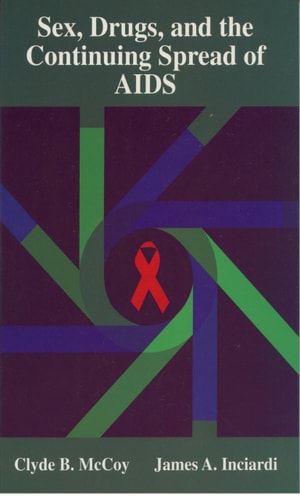
Sex, Drugs, and the Continuing Spread of AIDS
0
0
As an Amazon Associate and affiliate partner, Menrva Books earns from qualifying purchases. Learn more
Author Description
The book covers the nature and origins of AIDS, its social dimensions and impact on people and institutions, and alternatives for reducing the continuing spread of the disease. McCoy and Inciardi offer a breadth of perspectives on important issues from a wide array of sources--without pitting these viewpoints against each other. The chapters largely follow the chronology of the AIDS epidemic.Written in plain English, the book's direct, illustrative style bridges the gap between scholarly literature and the literate lay reader with a tasteful synthesis of information, research, and themes in popular culture. It brings students directly to grips with the AIDS epidemic, illustrating that AIDS is not "someone else's problem." One of the book's strengths is that it not only presents material but actively helps the student make sense of it.Sex, Drugs, and the Continuing Spread of AIDS offers an alternative to existing books, many of which are edited collections. It covers previously ignored topics and includes original field research.In the United States, men who have sex with men and injection drug users represent the vast majority of individuals with AIDS, while other members of the HIV/AIDS caseload reflect relatively small numbers. However, the heterosexual spread of HIV in the U.S. is increasing, particularly in those cities and communities where rates of injection drug use are high.Elsewhere in the world, especially in developing nations, heterosexual spread is the major route of transmission. At issue is the extent to which heterosexual transmission has an impact on the general spread of AIDS. During the past decade, there have been conflicting arguments in this regard. Sex, Drugs, and the Continuing Spread of AIDS addresses this ongoing debate.
Menrva's Summary
THE THESIS
This work investigates the complex social and behavioral factors driving the transmission of HIV/AIDS, specifically focusing on the intersection of drug use and sexual practices. Authors Clyde B. McCoy and James A. Inciardi utilize their backgrounds in sociology and criminology to synthesize diverse research perspectives into a coherent framework. By examining the epidemic through both a historical lens and contemporary field research, they argue that understanding the social dimensions of the disease is as critical as understanding its biological nature.
THE SCOPE MAP
What You Will Find
- Historical chronology of the AIDS epidemic in the United States and globally
- Analysis of transmission patterns among injection drug users and men who have sex with men
- Examination of the increasing role of heterosexual transmission in HIV spread
- Original field research and synthesis of existing scholarly literature
THE AUTHORITY PERSPECTIVE
Experts recognize this text for its ability to bridge the gap between academic research and accessible prose for the lay reader. It is frequently cited for its direct approach to sensitive topics and its utility in educational settings for students of public health and sociology.
Page Count:
182
Publication Date:
1995-01-01
Publisher:
Oxford University Press
ISBN-10:
0195329708
ISBN-13:
9780195329704
Politics
Public Health
Sociology
Medicine
Social Science
Epidemiology
Community Tags
Other Editions(2)
Similar Books













Reader Comments
Share Your Thoughts
No comments yet. Be the first to share your thoughts!