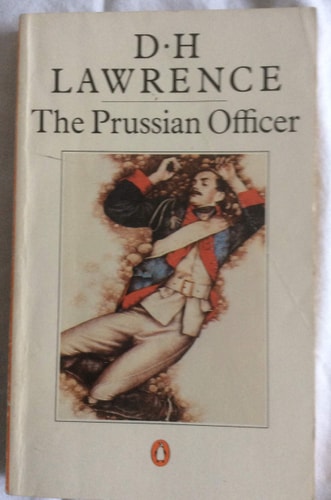
The Prussian Officer and Other Stories
0
0
As an Amazon Associate and affiliate partner, Menrva Books earns from qualifying purchases. Learn more
Author Description
This work has been selected by scholars as being culturally important, and is part of the knowledge base of civilization as we know it. This work was reproduced from the original artifact, and remains as true to the original work as possible. Therefore, you will see the original copyright references, library stamps (as most of these works have been housed in our most important libraries around the world), and other notations in the work.This work is in the public domain in the United States of America, and possibly other nations. Within the United States, you may freely copy and distribute this work, as no entity (individual or corporate) has a copyright on the body of the work.As a reproduction of a historical artifact, this work may contain missing or blurred pages, poor pictures, errant marks, etc. Scholars believe, and we concur, that this work is important enough to be preserved, reproduced, and made generally available to the public. We appreciate your support of the preservation process, and thank you for being an important part of keeping this knowledge alive and relevant.
Menrva's Summary
THE PULSE
The collection examines the volatile intersection of authority, repressed desire, and the dehumanizing effects of rigid social structures. Lawrence presents a series of narratives that focus on individuals struggling against the constraints of their environments, whether military, domestic, or industrial. The protagonists often find their personal agency thwarted by external forces, leading to internal psychological ruptures. The narrative framework utilizes a third-person perspective that shifts between detached observation and intense interiority to expose the underlying tensions of early 20th-century life. The physical settings, ranging from barracks to coal-mining villages, serve as rigid backdrops that amplify the characters' emotional isolation.
INSIDE THE PAGES
- Exploration of the psychological impact of military discipline
- Focus on the tension between instinct and social expectation
- Use of naturalistic settings to mirror internal character states
- Examination of power dynamics in interpersonal relationships
- Recurring themes of alienation and suppressed passion
- Stylistic emphasis on sensory detail and atmospheric prose
- Critique of industrialization and its effect on human connection
- Non-linear progression of thematic intensity across the collection
THE COLLECTIVE ECHO
Readers and critics frequently note the intense psychological depth Lawrence brings to these short narratives. Discussion often centers on the author's ability to capture the friction between individual desire and the rigid expectations of society. Many highlight the stark, often brutal atmosphere of the title story as a defining example of the collection's thematic focus on power and submission. Critics observe that the pacing varies significantly, allowing for both quiet, introspective moments and sudden, violent shifts in character trajectory. The collection is widely regarded as a significant entry point for understanding the development of Lawrence's modernist style and his preoccupation with the human condition.
Page Count:
224
Publication Date:
1945-01-02
Publisher:
Penguin UK
ISBN-10:
0140005137
ISBN-13:
9780140005134
Classic Literature
Psychological
Modernist
Short Stories
War fiction
Community Tags
Similar Books