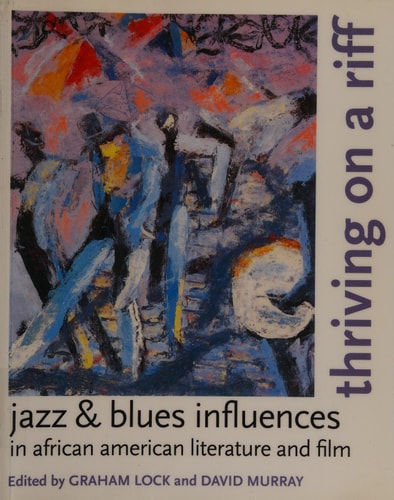
Thriving on a Riff: Jazz & Blues Influences in African American Literature and Film
0
0
As an Amazon Associate and affiliate partner, Menrva Books earns from qualifying purchases. Learn more
Author Description
From the Harlem Renaissance to the present, African American writers have drawn on the rich heritage of jazz and blues, transforming musical forms into the written word. In this companion volume to The Hearing Eye, distinguished contributors ranging from Bertram Ashe to Steven C. Tracy explore the musical influence on such writers as Sterling Brown, J.J. Phillips, Paul Beatty, and Nathaniel Mackey. Here, too, are Graham Lock's engaging interviews with contemporary poets Michael S. Harper and Jayne Cortez, along with studies of the performing self, in Krin Gabbard's account of Miles Davis and John Gennari's investigation of fictional and factual versions of Charlie Parker. The book also looks at African Americans in and on film, from blackface minstrelsy to the efforts of Duke Ellington and John Lewis to rescue jazz from its stereotyping in Hollywood film scores as a signal for sleaze and criminality. Concluding with a proposal by Michael Jarrett for a new model of artistic influence, Thriving on a Riff makes the case for the seminal cross-cultural role of jazz and blues.
Menrva's Summary
THE THESIS
This volume investigates the profound and enduring influence of jazz and blues musical traditions on the development of African American literature and cinematic representation. Editors David M. Murray and Graham Lock assemble a collection of scholarly essays and interviews that examine how musical structures, rhythms, and improvisational techniques have been translated into written narratives and visual media. By analyzing the work of canonical and contemporary figures, the contributors argue that these musical forms serve as a foundational aesthetic framework for understanding the evolution of Black artistic expression in the United States.
THE SCOPE MAP
What You Will Find
- Historical analysis of the intersection between jazz and blues and African American literary movements from the Harlem Renaissance to the present.
- Critical studies of specific authors including Sterling Brown, J.J. Phillips, Paul Beatty, and Nathaniel Mackey.
- Primary source interviews with poets Michael S. Harper and Jayne Cortez regarding the intersection of music and verse.
- Examination of the representation of African Americans in film, focusing on the subversion of Hollywood stereotypes and the musical contributions of Duke Ellington and John Lewis.
THE AUTHORITY PERSPECTIVE
Scholars and critics recognize this collection as a significant contribution to the interdisciplinary study of music and literature. The text is frequently cited for its ability to bridge the gap between musicology and literary theory, providing a comprehensive look at how jazz and blues function as both cultural history and artistic methodology.
Page Count:
320
Publication Date:
2009-01-02
Publisher:
Oxford University Press
ISBN-10:
0195337093
ISBN-13:
9780195337099
Music
Cultural History
Literary Criticism
Film Studies
Music and literature
Blues
Jazz
Criticism history
African Americans
Blues Music
Community Tags
Similar Books