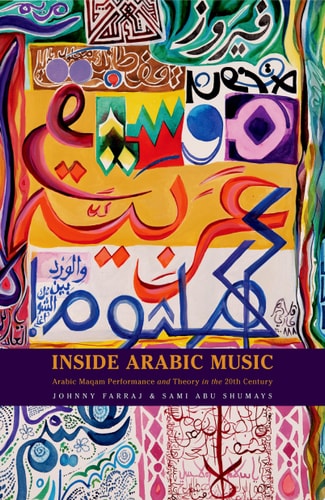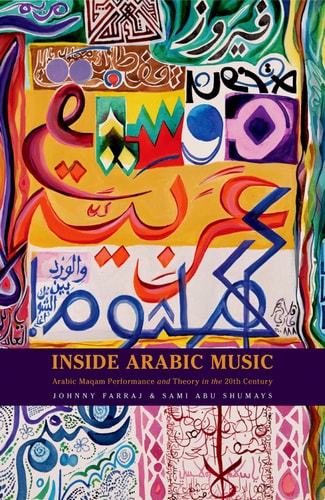
Inside Arabic Music: Arabic Maqam Performance and Theory in the 20th Century
0
0
As an Amazon Associate and affiliate partner, Menrva Books earns from qualifying purchases. Learn more
Author Description
What makes hundreds of listeners cheer ecstatically at the same instant during a live concert by Egyptian diva Umm Kulthum? What is the unspoken language behind a taqsim (traditional instrumental improvisation) that performers and listeners implicitly know? How can Arabic music be so rich and diverse without resorting to harmony? Why is it so challenging to transcribe Arabic music from a recording? Inside Arabic Music answers these and many other questions from the perspective of two "insiders" to the practice of Arabic music, by documenting a performance culture and a know-how that is largely passed on orally.Arabic music has spread across the globe, influencing music from Greece all the way to India in the mid-20th century through radio and musical cinema, and global popular culture through Raqs Sharqi, known as "Bellydance" in the West. Yet despite its popularity and influence, Arabic music, and the maqam scale system at its heart, remain widely misunderstood. Inside Arabic Music de-mystifies maqam with an approach that draws theory directly from practice, and presents theoretical insights that will be useful to practitioners, from the beginner to the expert - as well as those interested in the related Persian, Central Asian, and Turkish makam traditions. Inside Arabic Music's discussion of maqam and improvisation widens general understanding of music as well, by bringing in ideas from Saussurean linguistics, network theory, and Lakoff and Johnson's theory of cognition as metaphor, with an approach parallel to Gjerdingen's analysis of Galant-period music - offering a lens into the deeper relationships among music, culture, and human community.
Menrva's Summary
THE THESIS
This work investigates the complex theoretical and performance-based structures of Arabic maqam, seeking to demystify the system for both practitioners and scholars. Authors Johnny Farraj and Sami Abu Shumays utilize their extensive backgrounds as performers and researchers to bridge the gap between oral tradition and formal musicology. By grounding their analysis in the actual practice of 20th-century Arabic music, they provide a framework that explains how this non-harmonic system functions as a sophisticated language of improvisation and cultural expression.
THE SCOPE MAP
What You Will Find
- A comprehensive analysis of the maqam scale system and its role in Arabic musical identity.
- Theoretical applications derived from linguistics, network theory, and cognitive metaphor.
- Detailed examinations of performance practices, including the art of taqsim.
- Comparative insights regarding related Persian, Central Asian, and Turkish musical traditions.
Scope Limits
- The text focuses primarily on the 20th-century performance culture rather than ancient or pre-modern historical developments.
- It does not serve as a general history of Arabic music, but rather as a technical and theoretical manual for understanding its internal logic.
THE AUTHORITY PERSPECTIVE
Experts and musicians frequently cite this work as a foundational text for those seeking to understand the mechanics of Arabic music beyond Western harmonic conventions. Readers often note the clarity with which the authors translate complex oral traditions into accessible, structured theory.
Page Count:
480
Publication Date:
2019-08-15
Publisher:
Oxford University Press
ISBN-10:
0190658355
ISBN-13:
9780190658359
Music
Music
Middle Eastern
Music Asian
Criticism history
Cultural History
Music theory