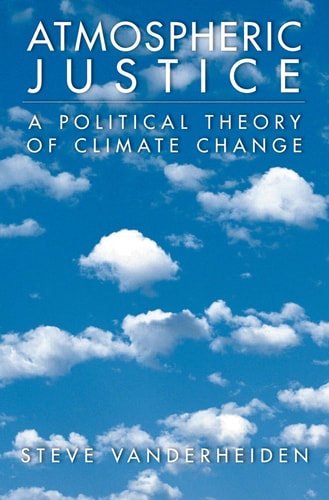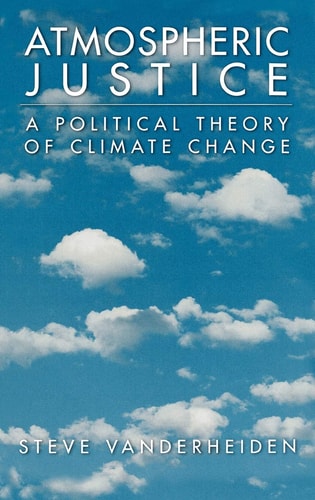
Atmospheric Justice: A Political Theory of Climate Change
0
0
As an Amazon Associate and affiliate partner, Menrva Books earns from qualifying purchases. Learn more
Author Description
When the policies and activities of one country or generation harm both other nations and later generations, they constitute serious injustices. Recognizing the broad threat posed by anthropogenic climate change, advocates for an international climate policy development process have expressly aimed to mitigate this pressing contemporary environmental threat in a manner that promotes justice. Yet, while making justice a primary objective of global climate policy has been the movement's noblest aspiration, it remains an onerous challenge for policymakers.Atmospheric Justice is the first single-authored work of political theory that addresses this pressing challenge via the conceptual frameworks of justice, equality, and responsibility. Throughout this incisive study, Steve Vanderheiden points toward ways to achieve environmental justice by exploring how climate change raises issues of both international and intergenerational justice. In addition, he considers how the design of a global climate regime might take these aims into account. Engaging with the principles of renowned political philosopher John Rawls, he expands on them by factoring in the needs of future generations. Vanderheiden also demonstrates how political theory can contribute to reaching a better understanding of the proper human response to climate change. By showing how climate policy offers insights into resolving contemporary controversies within political theory, he illustrates the ways in which applying normative theory to policy allows us to better understand both.Thoroughly researched and persuasively argued, Atmospheric Justice makes an important step toward providing us with a set of carefully elaborated first principles for achieving environmental justice.
Menrva's Summary
THE THESIS
This work investigates how the conceptual frameworks of justice, equality, and responsibility can be applied to the development of international climate policy. Steve Vanderheiden, a scholar of political theory, utilizes the principles of John Rawls to construct a normative framework that addresses the ethical obligations nations owe to one another and to future generations. By bridging the gap between abstract political theory and practical environmental policy, the author argues that a just global climate regime is both necessary and achievable through rigorous ethical analysis.
THE SCOPE MAP
What You Will Find
- Analysis of international and intergenerational justice in the context of global warming
- Application of John Rawls's political philosophy to environmental policy design
- Examination of anthropogenic climate change as a source of political and moral injustice
- Theoretical models for distributing responsibility among nations and generations
THE AUTHORITY PERSPECTIVE
Experts recognize this text as a foundational contribution to the intersection of political theory and environmental ethics. Readers frequently note the academic density of the prose, which is intended for scholars and policymakers seeking a structured normative approach to climate governance.
Page Count:
304
Publication Date:
2008-04-16
Publisher:
Oxford University Press
ISBN-10:
0195334604
ISBN-13:
9780195334609
Philosophy
Climatic changes
Climate Change
Ethics