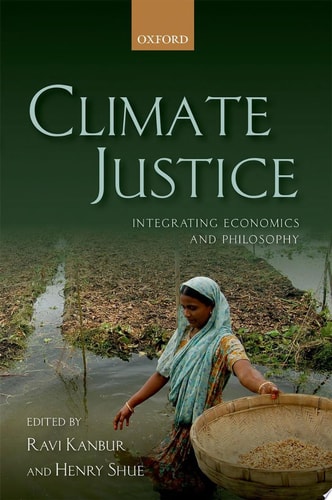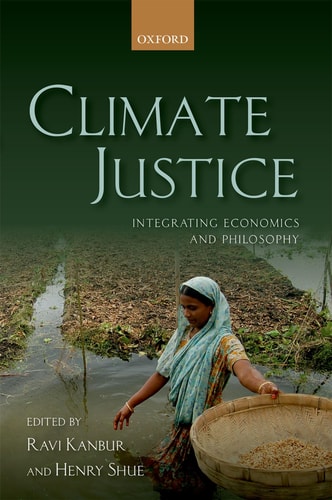
Climate Justice: Integrating Economics and Philosophy
0
0
As an Amazon Associate and affiliate partner, Menrva Books earns from qualifying purchases. Learn more
Author Description
Climate justice requires sharing the burdens and benefits of climate change and its resolution equitably and fairly. It brings together justice between generations and justice within generations. In particular it requires that attempts to address justice between generations through various interventions designed to curb greenhouse emissions today do not end up creating injustice in our time by hurting the currently poor and vulnerable. The United Nations Sustainable Development Goals (SDGs) summit in September 2015, and the Conference of Parties (COP) to the Framework Convention on Climate Change in Paris in December 2015, brought climate change and its development impact centre stage in global discussions.In the run up to Paris, Mary Robinson, former President of Ireland and UN Secretary General's Special Envoy for Climate Change, instituted the Climate Justice Dialogue "to mobilize political will and creative thinking to shape an ambitious and just international climate agreement in 2015". The editors of this volume, an economist and a philosopher, served on the High Level Advisory Committee of the Climate Justice Dialogue. They noted the overlap and mutual enforcement between the economic and philosophical discourses on climate justice. But they also noted the great need for these strands to come together to support the public and policy discourse. Climate Justice: Integrating Economics and Philosophy is the result.Bringing together contributions from economists and philosophers, Climate Justice illustrates the different approaches, how they overlap and interact, and what they have already learned from each other and might still have to learn.
Menrva's Summary
THE THESIS
How can economic frameworks and philosophical principles be integrated to achieve equitable climate justice across generations and within current populations? This volume, edited by economist Ravi Kanbur and philosopher Henry Shue, addresses the critical intersection of these two disciplines in the context of global climate policy. Drawing on their experience with the Climate Justice Dialogue, the authors curate a collection of essays that examine the ethical and practical challenges of distributing the burdens of climate change mitigation without exacerbating poverty or inequality.
THE SCOPE MAP
What You Will Find
- Interdisciplinary analysis of climate change mitigation strategies.
- Theoretical frameworks for intergenerational and intragenerational justice.
- Case studies evaluating the impact of climate policy on vulnerable populations.
- Synthesis of economic modeling and ethical reasoning in international policy discourse.
THE AUTHORITY PERSPECTIVE
Experts identify this work as a significant contribution to the bridge between normative ethics and empirical economic policy. Readers frequently note the academic density of the prose, which serves as a foundational text for scholars and policymakers interested in the intersection of climate action and social equity.
Page Count:
288
Publication Date:
2018-12-27
Publisher:
Oxford University Press
ISBN-10:
0198813244
ISBN-13:
9780198813248
Philosophy
Economics
Climatic changes
Sustainability
Social justice
Climate Change