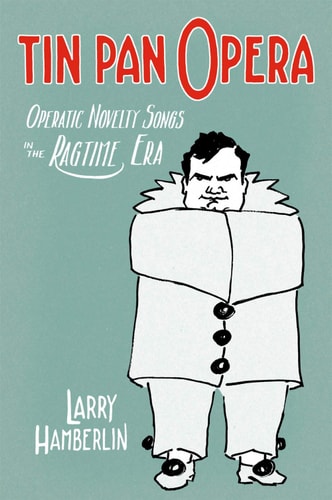
Tin Pan Opera: Operatic Novelty Songs in the Ragtime Era
0
0
As an Amazon Associate and affiliate partner, Menrva Books earns from qualifying purchases. Learn more
Author Description
Though the distance between opera and popular music seems immense today, a century ago opera was an integral part of American popular music culture, and familiarity with opera was still a part of American "cultural literacy." During the Ragtime era, hundreds of humorous Tin Pan Alley songs centered on operatic subjects-either directly quoting operas or alluding to operatic characters and vocal stars of the time. These songs brilliantly captured the moment when popular music in America transitioned away from its European operatic heritage, and when the distinction between low- and high-brow "popular" musical forms was free to develop, with all its attendant cultural snobbery and rebellion.Author Larry Hamberlin guides us through this large but oft-forgotten repertoire of operatic novelties, and brings to life the rich humor and keen social criticism of the era. In the early twentieth-century, when new social forces were undermining the view that our European heritage was intrinsically superior to our native vernacular culture, opera-that great inheritance from our European forebearers-functioned in popular discourse as a signifier for elite culture. Tin Pan Opera shows that these operatic novelty songs availed this connection to a humorous and critical end. Combining traditional, European operatic melodies with the new and American rhythmic verve of ragtime, these songs painted vivid images of immigrant Americans, liberated women, and upwardly striving African Americans, striking emblems of the profound transformations that shook the United States at the beginning of the American century.
Menrva's Summary
THE THESIS
How did operatic novelty songs during the Ragtime era function as a bridge and a site of cultural critique between European high-brow traditions and emerging American popular music? Dr. Larry Hamberlin, a scholar of American music, examines a forgotten repertoire of Tin Pan Alley songs that utilized operatic themes to navigate the shifting social landscape of the early twentieth century. By analyzing the intersection of European operatic melodies and the rhythmic innovation of ragtime, Hamberlin argues that these songs served as a mechanism for Americans to negotiate their relationship with elite European culture while defining a new, native identity. The book utilizes a historical framework to demonstrate how these musical novelties reflected contemporary anxieties regarding immigration, gender roles, and racial upward mobility.
THE SCOPE MAP
What You Will Find
- Analysis of hundreds of Tin Pan Alley novelty songs from the Ragtime era.
- Examination of the cultural tension between European operatic heritage and American vernacular music.
- Case studies on how operatic references were used to depict immigrant experiences and changing gender dynamics.
- Historical context regarding the development of high-brow and low-brow cultural distinctions in the United States.
THE AUTHORITY PERSPECTIVE
Experts recognize this work as a significant contribution to the study of American popular music history and the sociology of the Ragtime era. Scholars frequently note the depth of Hamberlin's research into obscure musical archives and his ability to connect specific lyrical content to broader social transformations.
Page Count:
344
Publication Date:
2011-01-21
Publisher:
Oxford University Press
ISBN-10:
0195338928
ISBN-13:
9780195338928
History
Music
Popular music
Music american
American History
Musicology
Community Tags
Similar Books














