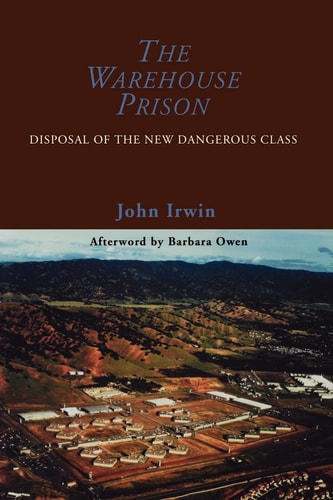
The Warehouse Prison: Disposal of the New Dangerous Class
0
0
As an Amazon Associate and affiliate partner, Menrva Books earns from qualifying purchases. Learn more
Author Description
While prison populations in the U.S. increased almost tenfold from 1980 to 2000, studies of men's prisons have dwindled. For this reason, eminent criminologist John Irwin was impelled to examine imprisonment during this period, and he chose Solano State Prison as the site for his study. Solano is a typical example of a prison in which new, popular forms of technology and prison regimens have been instituted. The facility houses up to 6,000 prisoners at middle-security levels--II and III in California's range of custodies. (The high-security supermax prisons are level IV.)Irwin found that prison planners and administrators have developed a system that keeps the facility's 6,000 prisoners almost completely controlled--crowded together in limited space and with limited access to rehabilitative and recreational programs. This control is accomplished through the physical design of the prison, the rigid enforcement of an extensive set of rules, and a simplified protocol for transferring troublesome prisoners to supermax prisons.Irwin also discovered that while the prisoners--most of whom are serving sentences of more than five years--are not brutalized, they suffer profoundly under this new form of imprisonment and experience tremendous readjustment difficulties when they are released back into society. In her Afterword, criminologist Barbara Owen investigates the conditions in women's correctional facilities and concludes that female prisoners endure even more abysmal treatment than the men.This book examines the forces that have made the United States the most punitive nation in the world--and perhaps in all of history. Irwin's accessible writing style brings a real-world, insider's perspective to his depiction of prison life. Quotations from individuals within the correctional system further enliven this intriguing text. The Warehouse Prison is a unique study of the modern prison and essential reading for students of corrections and criminal justice.
Menrva's Summary
THE THESIS
This book investigates how the rapid expansion of the U.S. prison system between 1980 and 2000 transformed correctional facilities into warehouses designed primarily for control rather than rehabilitation. John L. Irwin, a respected criminologist, utilizes his extensive background in the field to conduct a focused study of Solano State Prison. By analyzing the physical design, administrative protocols, and the daily experiences of inmates, Irwin argues that modern penal systems prioritize the containment of a perceived 'dangerous class' over the successful reintegration of individuals into society.
THE SCOPE MAP
What You Will Find
- An analysis of prison population growth in the United States from 1980 to 2000.
- A detailed examination of the physical and procedural mechanisms used to maintain control in level II and III facilities.
- Qualitative evidence gathered through direct observation and interviews with individuals within the correctional system.
- A comparative look at the conditions of female prisoners as documented in the supplemental afterword.
THE AUTHORITY PERSPECTIVE
Experts and students of criminal justice frequently cite this work for its clear, accessible prose and its critical look at the shift toward punitive incarceration models. Readers note that the text provides a foundational perspective on the long-term societal consequences of mass imprisonment.
Page Count:
318
Publication Date:
2004-11-10
Publisher:
Oxford University Press
ISBN-10:
0195330471
ISBN-13:
9780195330472
Non-Fiction
Criminology
Prisons
Corrections
Social Science
Sociology
United States
Imprisonment
Community Tags
Similar Books