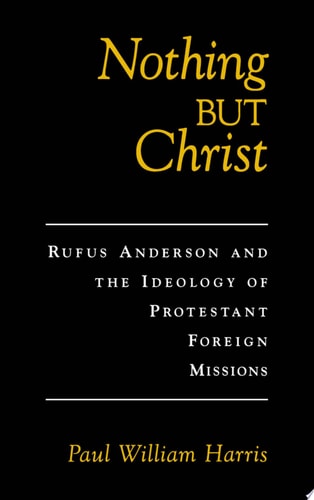
Nothing but Christ: Rufus Anderson and the Ideology of Protestant Foreign Missions
0
0
As an Amazon Associate and affiliate partner, Menrva Books earns from qualifying purchases. Learn more
Author Description
This book examines the career of Rufus Anderson, the central figure in the formation and implementation of missionary ideology in the middle decades of the nineteenth century. Corresponding Secretary of the American Board of Commissioners for Foreign Missions from 1832 to 1866, Anderson effectively set the terms of debate on missionary policy on both sides of the Atlantic and indeed long after his death. In telling his story, Harris also speaks to basic questions in nineteenth-century American history and in the relationship between American culture and the cultures of what later came to be known as the third world.
Menrva's Summary
THE THESIS
This book investigates how Rufus Anderson, as the long-serving Corresponding Secretary of the American Board of Commissioners for Foreign Missions, established the foundational ideology and policy frameworks for nineteenth-century Protestant missionary work. Paul G. Harris utilizes archival records and historical analysis to document Anderson's influence from 1832 to 1866. The work argues that Anderson's administrative strategies were not merely organizational but reflected broader shifts in American cultural identity and its interaction with global societies. By examining his career, the author provides a lens into the complex power dynamics between Western religious institutions and the cultures they sought to influence.
THE SCOPE MAP
What You Will Find
- Detailed analysis of the American Board of Commissioners for Foreign Missions administrative policies.
- Historical examination of nineteenth-century Protestant missionary ideology.
- Primary source research regarding transatlantic religious discourse.
- Exploration of the cultural impact of American missionary efforts on developing regions.
THE AUTHORITY PERSPECTIVE
Scholars of American religious history recognize this text as a definitive account of the administrative mechanisms behind nineteenth-century missionary expansion. The prose is noted for its academic rigor and its ability to connect individual biography to the larger geopolitical context of the era.
Page Count:
216
Publication Date:
2000-01-01
Publisher:
Oxford University Press
ISBN-10:
0195344030
ISBN-13:
9780195344035
Biography
Religion
History
American History
Missions_theory
Missionary Studies
Protestantism
Missionaries biography
Community Tags
Similar Books