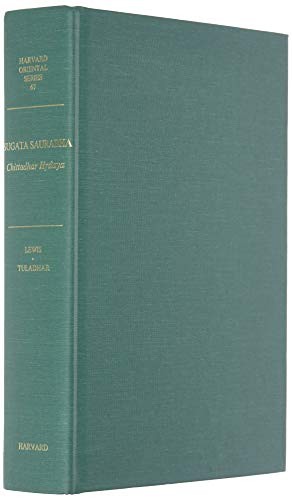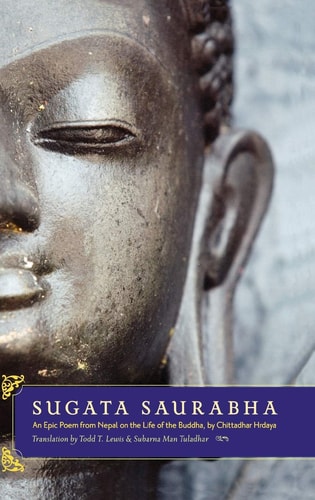
Sugata Saurabha: An Epic Poem from Nepal on the Life of the Buddha
0
0
As an Amazon Associate and affiliate partner, Menrva Books earns from qualifying purchases. Learn more
Author Description
The Sugata Saurabha is an epic poem that retells the story of the Buddha's life. It was published in 1947 in the Nepalese language, Newari, by Chittadhar Hridaya, one of the greatest literary figures of 20th-century Nepal. The text is remarkable for its comprehensiveness, artistry, and nuance. It covers the Buddha's life from birth to death and conveys his basic teachings with simple clarity. It is also of interest because, where the classical sources are silent, Hridaya inserts details of personal life and cultural context that are Nepalese. The effect is to humanize the founder and add the texture of real life. A third point of interest is the modernist perspective that underlies the author's manner of retelling this great spiritual narrative. This rendering, in a long line of accounts of the Buddha's life dating back almost 2,000 years, may be the last ever to be produced that conforms to the traditions of Indic classic poetry. It will not only appeal to scholars of Buddhism but will find use in courses that introduce students to the life of the Buddha.
Menrva's Summary
THE PULSE
This epic poem chronicles the life of Siddhartha Gautama, the Buddha, from his royal birth to his final transition into parinirvana. The narrative follows the protagonist as he abandons his princely life to seek an end to human suffering, ultimately attaining enlightenment and establishing a path for others to follow. Hridaya utilizes the traditional structure of Indic epic poetry to frame the Buddha's spiritual evolution, while simultaneously grounding the narrative in the specific cultural landscape of Nepal. The poem functions as both a devotional account and a modernist reinterpretation of ancient canonical texts.
INSIDE THE PAGES
- Adherence to the formal conventions of Indic classical poetry.
- Integration of localized Nepalese cultural context and daily life details.
- Comprehensive biographical scope covering the entirety of the Buddha's life.
- Modernist literary perspective applied to a traditional spiritual narrative.
- Clear, accessible articulation of core Buddhist philosophical teachings.
- Humanization of the Buddha through the inclusion of personal and domestic details.
- Stylistic emphasis on artistry and nuance within the Newari language tradition.
- Preservation of a historical literary form that is increasingly rare in contemporary writing.
THE COLLECTIVE ECHO
Readers and scholars frequently highlight the work's significance as a bridge between ancient Buddhist tradition and 20th-century literary modernism. Discussion often centers on how Hridaya successfully balances the sacred nature of the Buddha's life with the inclusion of intimate, humanizing details that reflect his own Nepalese heritage. Critics note that the poem serves as a vital artifact for understanding the evolution of Newari literature and the enduring influence of the Buddha's narrative. The work is widely regarded as a sophisticated synthesis of spiritual devotion and artistic innovation, providing a distinct perspective that differs from classical Sanskrit or Pali accounts. It remains a primary reference point for those interested in the intersection of regional culture and global religious history.
Page Count:
416
Publication Date:
2009-12-21
Publisher:
Oxford University Press
ISBN-10:
0195341821
ISBN-13:
9780195341829
Religion
Biography
Poetry
Buddhism
Epic
Asian
Community Tags
Similar Books