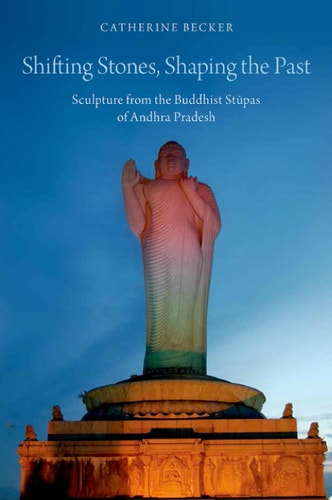
Shifting Stones, Shaping the Past: Sculpture from the Buddhist Stupas of Andhra Pradesh
0
0
As an Amazon Associate and affiliate partner, Menrva Books earns from qualifying purchases. Learn more
Author Description
In this wide-ranging exploration of the creation and use of Buddhist art in Andhra Pradesh, India, Catherine Becker examines how material remains and visual experiences shape and reveal essential human concerns.Shifting Stones, Shaping the Past addresses the fundamental Buddhist question of how humanity progresses centuries after the passing of its teacher, the Buddha Sakyamuni. How might the Buddha's distant teachings be made immediate and accessible? Beginning with an analysis of the spectacular relief sculptures that once adorned the stupas. Over a period of almost two millennia, many of these stupas have fallen into disrepair. While it is tempting to view these monuments as ruins, they are by no means "dead." Turning to the 20th and 21st centuries, Becker analyzes examples of new Buddhist imagery, recent state-sponsored tourism campaigns, and new devotional activities at the sites in order to demonstrate that the stupas of Andhra Pradesh and their sculptural adornments continue to engage the human imagination and are even ascribed innate power and agency. Shifting Stones, Shaping the Past reveals intriguing parallels between ancient uses of imagery and the new social, political, and religious functions of these objects and spaces.
Menrva's Summary
THE THESIS
This work investigates how the sculptural remains of Buddhist stupas in Andhra Pradesh function as active, evolving agents that bridge the temporal gap between the historical Buddha and contemporary religious practice. Catherine Becker, an expert in South Asian art history, utilizes a multidisciplinary framework that combines archaeological analysis, visual culture theory, and ethnographic observation. She argues that these monuments are not static ruins but dynamic sites that continue to shape social, political, and religious identities in the modern era.
THE SCOPE MAP
What You Will Find
- Analysis of relief sculptures from ancient Buddhist stupas in Andhra Pradesh.
- Examination of 20th and 21st-century devotional activities and state-sponsored tourism at historical sites.
- Comparative study of ancient imagery versus modern religious and political functions.
Scope Limits
- The study focuses specifically on the Andhra Pradesh region and does not provide a comprehensive survey of all Buddhist art across the Indian subcontinent.
- The text prioritizes the agency of the objects over a strictly chronological architectural history.
THE AUTHORITY PERSPECTIVE
Scholars in the field of South Asian art history recognize this text for its innovative approach to material agency and its ability to connect ancient sculptural traditions with contemporary religious life. Readers frequently note the academic rigor of the prose, which serves as a significant contribution to the study of Buddhist visual culture.
Page Count:
352
Publication Date:
2014-01-01
Publisher:
Oxford University Press
ISBN-10:
0190202157
ISBN-13:
9780190202156
Religion
Cultural Anthropology
Archaeology
Art And Society
Monuments_india
Buddhism
Art History
Asian
Asian History
Humanities
Sculpture
Community Tags
Similar Books