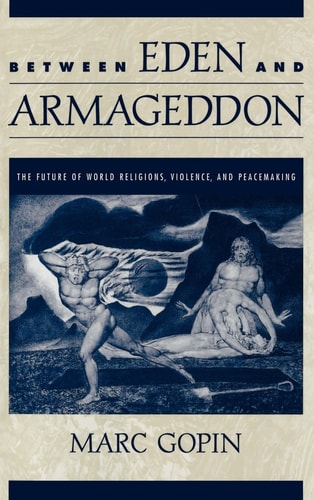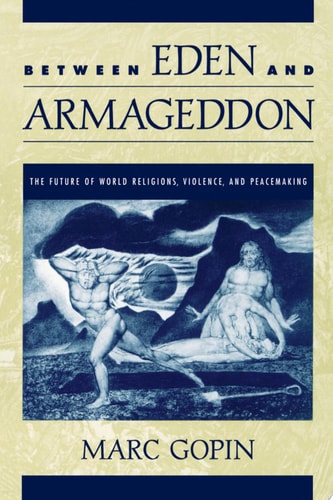
Between Eden and Armageddon: The Future of World Religions, Violence, and Peacemaking
0
0
As an Amazon Associate and affiliate partner, Menrva Books earns from qualifying purchases. Learn more
Author Description
Recent years have seen a meteoric rise in the power and importance of organized religion in many parts of the world. At the same time, there has been a significant increase in violence perpetrated in the name of religion. While much has been written on the relationship between violence and religious militancy, history shows that religious people have also played a critical role in peacemaking within numerous cultures. In the new century, will religion bring upon further catastrophes? Or will it provide human civilization with methods of care, healing, and the creation of peaceful and just societies? In this book, Marc Gopin integrates the study of religion with the study of conflict resolution. He argues that religion can play a critical role in constructing a global community of shared moral commitments and vision--a community that can limit conflict to its nonviolent, constructive variety. If we examine religious myths and moral traditions, Gopin argues, we can understand why and when religious people come to violence, and why and when they become staunch peacemakers. He shows that it is the conservative expression of most religious traditions that presents the largest challenge in terms of peace and conflict. Gopin considers ways to construct traditional paradigms that are committed to peacemaking on a deep level and offers such a paradigm for the case of Judaism. Throughout, Gopin emphasizes that developing the potential of the world's religions for coping with conflict demands a conscious process on the part of peacemakers and theologians. His innovative and carefully argued study also offers a broad set of recommendations for policy planners both inside and outside of government.
Menrva's Summary
THE THESIS
This work investigates whether the resurgence of organized religion in the 21st century will serve as a catalyst for global catastrophe or as a framework for healing and sustainable peace. Marc Gopin, a scholar specializing in religion and conflict resolution, synthesizes theological study with modern peacebuilding methodologies. He posits that religious traditions possess inherent moral resources that, when properly interpreted, can mitigate violence and foster constructive conflict resolution. The text argues that the conservative elements within religious institutions represent the primary obstacle to peace, necessitating a deliberate, theological effort to reframe traditional paradigms toward nonviolence.
THE SCOPE MAP
What You Will Find
- Analysis of the intersection between religious militancy and historical peacemaking efforts.
- A proposed framework for integrating religious moral traditions into modern conflict resolution strategies.
- Case study application focusing on the potential for peacemaking within Judaism.
- Strategic recommendations for policy planners and government officials regarding religious engagement.
THE AUTHORITY PERSPECTIVE
Experts in the field of peace studies recognize this text as a significant contribution to the discourse on religion and international relations. Readers frequently note the academic density of the prose, which balances theological inquiry with practical policy applications.
Page Count:
320
Publication Date:
2002-01-01
Publisher:
Oxford University Press
ISBN-10:
0195348079
ISBN-13:
9780195348071
Religion
Sociology
Theology
Conflict Resolution
Peace studies
International Security