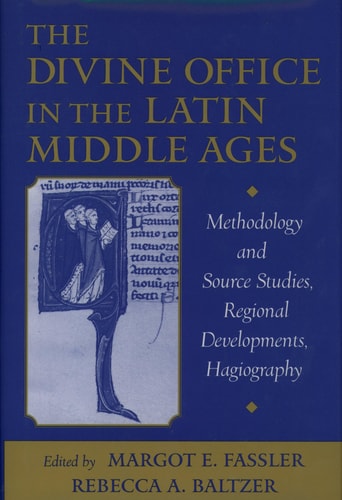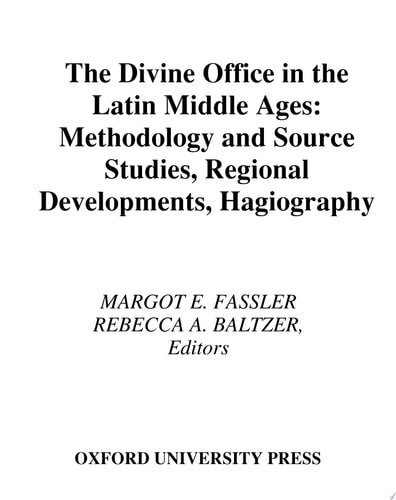
The Divine Office in the Latin Middle Ages: Methodology and Source Studies, Regional Developments, Hagiography
0
0
As an Amazon Associate and affiliate partner, Menrva Books earns from qualifying purchases. Learn more
Author Description
The Divine Office--the cycle of daily worship other than the Mass--is the richest source of liturgical texts and music from the Latin Middle Ages. However, its richness, the great diversity of its manuscripts, and its many variations from community to community have made it difficult to study, and it remains largely unexplored terrain. This volume is a practical guide to the Divine Office for students and scholars throughout the field of medieval studies. The book surveys the many questions related to the Office and presents the leading analytical tools and research methods now used in the field.Beginning with the Office in the early Middle Ages, the book covers manuscript sources and their contents; regional developments and variations; the relationship between the Office, the Mass, and other ceremonies and repertories; and the deep links between the Office and medieval hagiography. The book concludes with a discussion of recent technical advances for handling the enormous amounts of evidence on the Office and its performance, in particular CANTUS, the vast electronic database developed by Ruth Steiner of Catholic University for the analysis of chant repertories.The Divine Office in the Latin Middle Ages is an essential resource for anyone studying medieval liturgy. Its accessible style and broad coverage make it an important basic reference for a wide range of students and scholars in art history, religious studies, social history, literature, musicology, and theology.
Menrva's Summary
THE THESIS
This volume investigates the complex liturgical and musical traditions of the Divine Office in the Latin Middle Ages, providing a framework for navigating its vast and diverse manuscript evidence. Margot E. Fassler and Rebecca A. Baltzer, both established scholars in medieval music and liturgy, synthesize current research methodologies to address the challenges of studying daily worship practices. The text serves as a comprehensive guide for navigating regional variations, hagiographic connections, and the integration of digital tools in contemporary medieval scholarship.
THE SCOPE MAP
What You Will Find
- Analysis of manuscript sources and their contents from the early Middle Ages.
- Examination of regional developments and variations in liturgical practice.
- Methodologies for studying the relationship between the Office, the Mass, and other ceremonies.
- Technical guidance on utilizing the CANTUS database for chant repertory analysis.
THE AUTHORITY PERSPECTIVE
Experts recognize this volume as a foundational reference for students and researchers across musicology, history, and theology. Readers frequently note the clarity of the prose despite the technical density of the subject matter, making it a standard tool for navigating medieval liturgical studies.
Page Count:
656
Publication Date:
2000-01-01
Publisher:
Oxford University Press
ISBN-10:
0195352386
ISBN-13:
9780195352382
History
Religion
Humanities
Theology
European History
Music History
Musicology