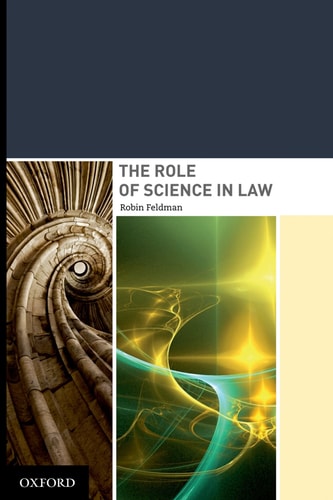
The Role of Science in Law
0
0
As an Amazon Associate and affiliate partner, Menrva Books earns from qualifying purchases. Learn more
Author Description
The allure of science has always captivated members of the legal profession. Its siren's song offers a tune of perfection and the promise of endowing law with the respect and deference from society that lawyers crave. Both the bench and the bar continually look to science to rescue them from the discomfort of difficult legal decisions, and are frequently disappointed with the results.While most authors frame problems at the intersection of law and science in terms of how rapidly scientific information changes and how frequently the legal system distorts science, this book argues that problems at the intersection of law and science flow not from the changing nature of science, but from the changing nature of law. With this in mind, the book uses examples from doctrines related to abortion, gene patenting, copyright, environmental regulation, antitrust law, the insanity defense, and other doctrines to explore the nature of law and to suggest approaches for making science work more effectively within the domain of law.
Menrva's Summary
THE THESIS
This book investigates why the integration of scientific evidence into the legal system consistently produces friction and disappointment for both the bench and the bar. Author Robin Feldman, a professor of law, argues that these systemic failures are not caused by the inherent volatility of scientific discovery, but rather by the evolving and often rigid nature of legal doctrine itself. By examining the structural limitations of the judiciary, the text proposes a framework for better aligning scientific methodology with legal decision-making processes.
THE SCOPE MAP
What You Will Find
- Analysis of legal doctrines including abortion, gene patenting, and copyright law.
- Examination of the insanity defense and antitrust regulation through a scientific lens.
- A critique of the legal system's tendency to seek objective certainty from subjective scientific interpretation.
- Proposed methodologies for improving the efficacy of scientific evidence within courtroom settings.
THE AUTHORITY PERSPECTIVE
Legal scholars and practitioners identify this work as a critical examination of the structural disconnect between scientific inquiry and judicial application. Experts frequently cite the book for its ability to shift the focus from scientific instability to the inherent limitations of legal doctrine.
Page Count:
240
Publication Date:
2009-03-09
Publisher:
Oxford University Press
ISBN-10:
0195368584
ISBN-13:
9780195368581
Philosophy
Science
Science & Technology
Philosophy history
Jurisprudence
Public Policy
Legal Studies
Systems Theory
Categories
Criminal Law
Law
Kindle Store
Kindle eBooks
Forensic Science
Community Tags
Similar Books