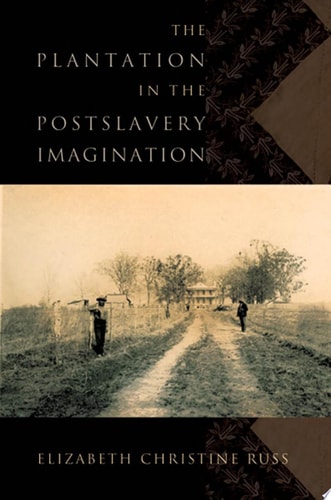
The Plantation in the Postslavery Imagination
0
0
As an Amazon Associate and affiliate partner, Menrva Books earns from qualifying purchases. Learn more
Author Description
In a provocative new approach toward understanding transnational literary cultures, this study examines the specter of the plantation, that physical place most vividly associated with slavery in the Americas. For Elizabeth Russ, the plantation is not merely a literal location, but also a vexing rhetorical, ideological, and psychological trope through which intersecting histories of the New World are told. Through a series of precise, in-depth readings, Russ analyzes the discourse of the plantation through a number of suggestive pairings: male and female perspectives; U.S. and Spanish American traditions; and continental alongside island societies.To chart comparative elements in the development of the postslavery imagination in the Northern and Southern hemispheres, Russ distinguishes between a modern and a postmodern imaginary. The former privileges a familiar plot of modernity: the traumatic transition from a local, largely agrarian order to an increasingly anonymous industrialized society. The latter, abandoning nostalgia toward the past, suggests a new history using the strategies of performance, such as witnessing, reticency, and traversal. Authors examined include The Twelve Southerners, Fernando Ortiz, Teresa de la Parra, Eudora Welty, Antonio Benítez Rojo, Gayl Jones, Toni Morrison, and Mayra Santos-Febres, among others.Applying sharp analyses across a broad range of texts, Russ reveals how the language used to imagine communities influenced by the plantation has been gendered, racialized, and eroticized in ways that oppose the domination of an ever-shifting "North" while often reproducing the fundamental power divide. Her work moves beyond the North-South dichotomy that has often stymied scholarly work in Latin American studies and, importantly, provides a model for future hemispheric approaches.
Menrva's Summary
THE THESIS
This study investigates how the plantation functions as a persistent rhetorical and psychological trope within the literature of the Americas during the post-slavery era. Elizabeth Christine Russ, a scholar of hemispheric literature, utilizes a comparative framework to analyze how the plantation serves as a site of ideological conflict. By examining texts from both the United States and Spanish America, she argues that the plantation remains a central, evolving construct that shapes how societies negotiate their histories of trauma, industrialization, and power dynamics.
THE SCOPE MAP
What You Will Find
- Comparative analysis of U.S. and Spanish American literary traditions.
- Distinction between modern and postmodern imaginaries in the context of agrarian and industrial shifts.
- Critical readings of authors including Toni Morrison, Eudora Welty, Fernando Ortiz, and Antonio Benítez Rojo.
- Examination of how the plantation trope is gendered, racialized, and eroticized in literary discourse.
THE AUTHORITY PERSPECTIVE
Scholars recognize this work as a significant contribution to hemispheric studies for its ability to bridge the gap between Northern and Southern literary traditions. Experts frequently highlight the text for its rigorous methodology and its success in moving beyond traditional binary frameworks to offer a more nuanced understanding of post-slavery cultural production.
Page Count:
224
Publication Date:
2009-11-05
Publisher:
Oxford University Press
ISBN-10:
019537715X
ISBN-13:
9780195377156
History
American History
American Studies
Criticism history
Literary Criticism
Community Tags
Similar Books