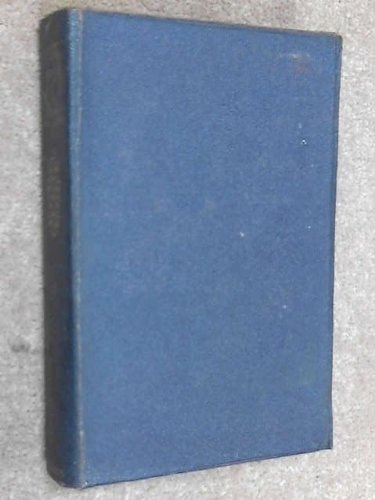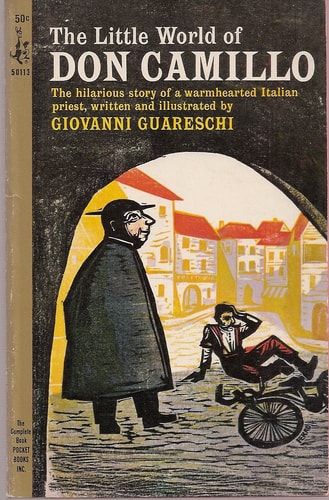
The Little World of Don Camillo
0
0
As an Amazon Associate and affiliate partner, Menrva Books earns from qualifying purchases. Learn more
Author Description
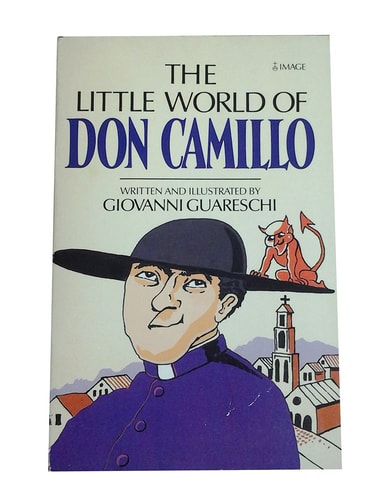
Reading ‘The Little World of Don Camillo’ is to travel to the Valley of the River Po, Italy’s widest and most fertile plain, with its unique atmosphere, culture and natural history. And to do so in the incomparable company of a cast of fictional characters who testify to the exquisite humour and humanity of their creator. In the Little World, eternal forces grapple with the absurd drama of everyday life, and hilarious and unearthly things can happen. If you keep this in mind you will have no difficulty in getting to know the village priest, Don Camillo, and his adversary, Peppone, the Communist Mayor. Nor will you be surprised when a third person watches the goings-on from a big cross in the village church and not infrequently intercedes... In story after story, the hot-headed Catholic priest, Don Camillo, and the equally pugnacious Communist mayor, Peppone, confront one another, sometimes in a serious and violent manner. The clever bit is the way Guareschi engineers a resolution to the conflict and transforms the situation to the great benefit of the local community, so that the two men put their political convictions aside and, however begrudgingly, develop respect for one another. To enable this, the author creates a third main character, his finest creation and the most surprising. Il Cristo presides over proceedings from above the altar of the town church and counsels Don Camillo, exposing and undermining the stubborn priest’s personal pride.
Menrva's Summary
THE PULSE
The central conflict arises from the persistent ideological and personal rivalry between a hot-headed village priest and a pugnacious Communist mayor in post-war Italy. Don Camillo and Peppone represent the opposing forces of the Catholic Church and the Communist Party, constantly clashing over the governance and moral direction of their small town in the Po Valley. Their disputes are mediated by the unique presence of Christ, who speaks from the altar to challenge the priest's pride and temper. The narrative framework consists of a series of interconnected short stories that highlight the absurdity of their local political battles against the backdrop of everyday rural life.
INSIDE THE PAGES
- Episodic narrative structure focusing on self-contained conflicts
- Personification of religious iconography as a moral compass
- Satirical examination of post-war Italian political polarization
- Use of regional setting to ground the narrative in specific cultural history
- Character-driven dialogue that emphasizes local dialect and temperament
- Exploration of the tension between dogma and pragmatic community needs
- Integration of humor to diffuse high-stakes ideological confrontations
- Focus on the underlying humanity shared by political adversaries
THE COLLECTIVE ECHO
Readers frequently highlight the balance of wit and wisdom found in the interactions between the two protagonists. Discussion often centers on how the author manages to make serious political themes accessible through the lens of small-town comedy. Critics note that the atmosphere of the Po Valley is rendered with a distinct sense of place that anchors the more fantastical elements of the story. Many readers appreciate the way the narrative avoids heavy-handed moralizing, instead focusing on the evolving respect between two stubborn men. The work is often cited for its ability to remain relevant by focusing on the universal nature of human conflict and reconciliation.
Page Count:
160
Publication Date:
1970-01-01
Publisher:
Penguin
ISBN-10:
0140017976
ISBN-13:
9780140017977
Humor
Satire
Short Stories
Italian
classic
Historical
Contemporary