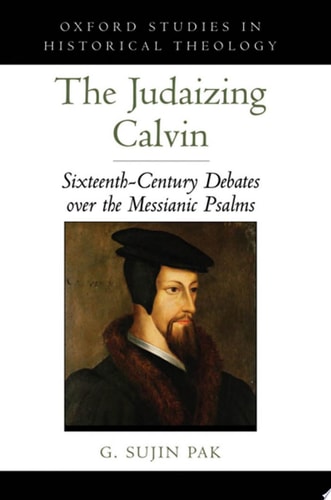
Judaizing Calvin: Sixteenth-Century Debates over the Messianic Psalms
0
0
As an Amazon Associate and affiliate partner, Menrva Books earns from qualifying purchases. Learn more
Author Description
By exploring how Martin Luther, Martin Bucer, and John Calvin interpreted a set of eight messianic psalms (Psalms 2, 8, 16, 22, 45, 72, 110, 188), Sujin Pak elucidates key debates about Christological exegesis during the era of the Protestant reformation. More particularly, Pak examines the exegeses of Luther, Bucer, and Calvin in order to (a) reveal their particular theological emphases and reading strategies, (b) identify their debates over the use of Jewish exegesis and the factors leading to charges of 'judaizing' leveled against Calvin, and (c) demonstrate how Psalms reading and the accusation of judaizing serve distinctive purposes of confessional identity formation. In this way, she portrays the beginnings of those distinctive trends that separated Lutheran and Reformed exegetical principles.
Menrva's Summary
THE THESIS
This work investigates the theological and exegetical controversies surrounding the interpretation of messianic psalms during the sixteenth-century Protestant Reformation. G. Sujin Pak, a scholar of historical theology, analyzes the distinct interpretive strategies of Martin Luther, Martin Bucer, and John Calvin. By examining their specific approaches to eight messianic psalms, the author argues that these exegetical differences were central to the formation of confessional identities and the emergence of separate Lutheran and Reformed traditions.
THE SCOPE MAP
What You Will Find
- Comparative analysis of eight specific messianic psalms: 2, 8, 16, 22, 45, 72, 110, and 118.
- Examination of the historical charge of 'judaizing' leveled against John Calvin.
- Evaluation of how sixteenth-century reformers utilized Jewish exegesis in their own theological frameworks.
- Discussion on the role of biblical interpretation in the development of Protestant confessional boundaries.
THE AUTHORITY PERSPECTIVE
Scholars recognize this text as a rigorous contribution to the study of Reformation-era hermeneutics and the history of biblical interpretation. Readers frequently note the academic density of the prose, which provides a nuanced understanding of how theological disputes shaped the early modern religious landscape.
Page Count:
216
Publication Date:
2009-12-03
Publisher:
Oxford University Press
ISBN-10:
0195371925
ISBN-13:
9780195371925
History
Christianity
Reformation
Theology
Community Tags
Similar Books