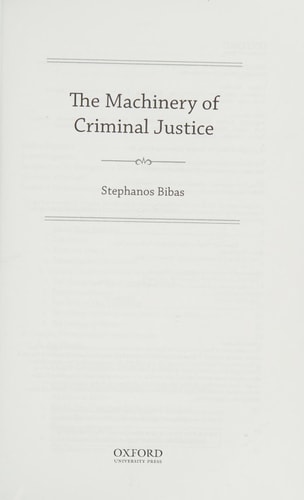
The Machinery of Criminal Justice
0
0
As an Amazon Associate and affiliate partner, Menrva Books earns from qualifying purchases. Learn more
Author Description
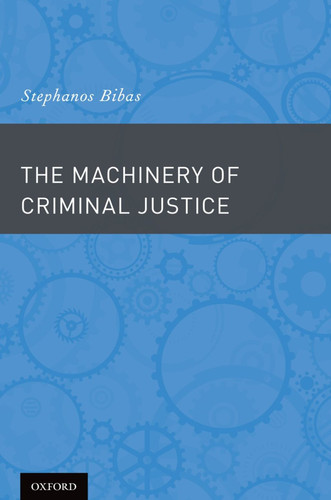
Two centuries ago, the American criminal justice was run primarily by laymen. Jury trials passed moral judgment on crimes, vindicated victims and innocent defendants, and denounced the guilty. But over the last two centuries, lawyers have taken over the process, silencing victims and defendants and, in many cases, substituting a plea-bargaining system for the voice of the jury. The public sees little of how this assembly-line justice works, and victims and defendants have largely lost their day in court. As a result, victims rarely hear defendants express remorse and apologize, and defendants rarely receive forgiveness. This lawyerized machinery has purchased efficient, speedy processing of many cases at the price of sacrificing softer values, such as reforming defendants and healing wounded victims and relationships. In other words, the U.S. legal system has bought quantity at the price of quality, without recognizing either the trade-off or the great gulf separating lawyers' and laymen's incentives, interests, values, and powers.In The Machinery of Criminal Justice, author Stephanos Bibas surveys these developments over the last two centuries, considers what we have lost in our quest for efficient punishment, and suggests ways to include victims, defendants, and the public once again. These ideas range from requiring convicts to work or serve in the military, to moving power from prosecutors to restorative sentencing juries. Bibas argues that doing so might cost more, but it would better serve criminal procedure's interests in denouncing crime, vindicating victims, reforming wrongdoers, and healing the relationships torn by crime.
Menrva's Summary
THE THESIS
This book investigates the historical shift from a layman-led criminal justice system to a lawyer-dominated, assembly-line process and questions the societal costs of prioritizing efficiency over restorative justice. Stephanos Bibas, a legal scholar, utilizes historical analysis and institutional critique to argue that the professionalization of the U.S. legal system has marginalized victims and defendants. He posits that the current plea-bargaining model sacrifices essential human elements—such as remorse, forgiveness, and rehabilitation—in favor of rapid case processing. The work serves as both a diagnostic of current systemic failures and a proposal for reintroducing public and victim participation into the courtroom.
THE SCOPE MAP
What You Will Find
- A historical overview of the American criminal justice system spanning the last two centuries.
- An analysis of the divergence between the incentives of legal professionals and the needs of laypeople.
- A critique of the plea-bargaining system and its impact on victim-defendant relationships.
- Proposed reforms, including restorative sentencing juries and alternative service requirements for convicts.
THE AUTHORITY PERSPECTIVE
Legal scholars and practitioners frequently cite this work for its clear articulation of the tension between procedural efficiency and moral accountability. Experts highlight the text as a significant contribution to the discourse on restorative justice and the structural reform of the American judiciary.
Page Count:
320
Publication Date:
2012-02-28
Publisher:
Oxford University Press
ISBN-10:
0195374681
ISBN-13:
9780195374681
History
Law
Professional Career & Trade
Sociology
Administration of Justice
Community Tags
Other Editions(3)
Similar Books







Reader Comments
Share Your Thoughts
No comments yet. Be the first to share your thoughts!