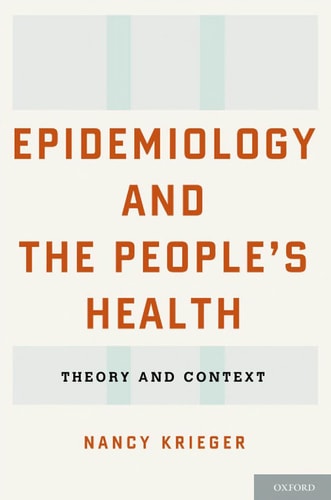
Epidemiology and the People's Health: Theory and Context
0
0
As an Amazon Associate and affiliate partner, Menrva Books earns from qualifying purchases. Learn more
Author Description
Epidemiology is often referred to as the science of public health. However, unlike other major sciences, its theoretical foundations are rarely articulated. While the idea of epidemiologic theory may seem dry and arcane, it is at its core about explaining the people's health. It is about life and death. It is about biology and society. It is about ecology and the economy. It is about how myriad aspects of people's lives - involving work, dignity, desire, love, play, conflict, discrimination, and injustice - become literally incorporated into our bodies and manifest in our health status, individually and collectively. And it is about essential knowledge critical for improving the people's health and minimizing inequitable burdens of disease, disability, and death.Woven from a vast array of schools of thought, including those in the natural, social, and biomedical sciences, epidemiologic theory is a rich tapestry whose time for analysis is long overdue. By tracing its history and contours from ancient societies on through the development of - and debates within - contemporary epidemiology worldwide, Dr. Krieger shows how epidemiologic theory has long shaped epidemiologic practice, knowledge, and the politics of public health. Outlining an ecosocial theory of disease distribution that situates both population health and epidemiologic theory in societal and ecologic context, she offers a more holistic picture of how we embody the human experience.This concise, conceptually rich, and accessible book is a rallying cry for a return to the study and discussion of epidemiologic theory: what it is, why it matters, how it has changed over time, and its implications for improving population health and promoting health equity. It should be required reading for all epidemiologists, or anyone involved in the study of human health and well-being.
Menrva's Summary
THE THESIS
This book investigates the theoretical foundations of epidemiology to explain how societal, ecological, and biological factors intersect to shape population health. Dr. Nancy Krieger, a professor of social epidemiology, draws upon a multidisciplinary framework that integrates natural, social, and biomedical sciences. She argues that epidemiologic theory is not merely an academic exercise but a critical tool for understanding the embodiment of human experience and addressing systemic health inequities. By tracing the historical evolution of the field, the author provides a robust argument for the necessity of an ecosocial approach to disease distribution.
THE SCOPE MAP
What You Will Find
- Historical analysis of epidemiologic thought from ancient societies to contemporary global practices.
- An introduction to the ecosocial theory of disease distribution.
- Examination of how social factors like discrimination, work, and injustice manifest in biological health outcomes.
- Methodological frameworks for connecting population health to societal and ecological contexts.
THE AUTHORITY PERSPECTIVE
Experts and public health professionals recognize this work as a foundational text for understanding the intersection of social justice and epidemiology. Readers frequently note the conceptual density of the prose, which serves as a rigorous call to action for those involved in health policy and research.
Page Count:
400
Publication Date:
2011-03-23
Publisher:
Oxford University Press
ISBN-10:
0195383877
ISBN-13:
9780195383874
Medicine
Science History
Epidemiology
Sociology
Public Health
Medical
Allied Health
Community Tags
Other Editions(2)

Similar Books















Reader Comments
Share Your Thoughts
No comments yet. Be the first to share your thoughts!