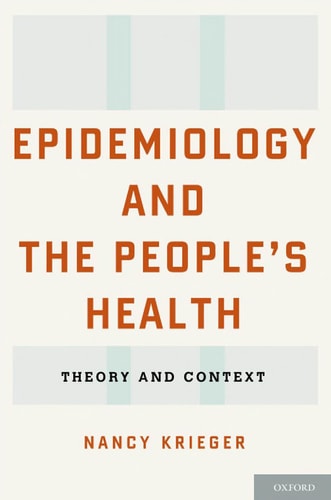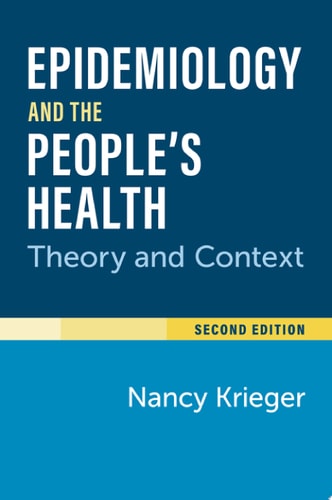
Epidemiology and the People's Health: Theory and Context
0
0
As an Amazon Associate and affiliate partner, Menrva Books earns from qualifying purchases. Learn more
Author Description
Why a thoroughly updated and revised second edition of this book about theories of disease distribution, in past and present societal and ecological context? Because the lived realities and ideas, data, and disinformation about the people's health are dynamic, not static. The first edition, published in 2011, addressed a major problem: although epidemiology is often referred to as the science of public health, unlike other sciences, its theoretical foundations are rarely articulated. While the idea of epidemiologic theory may seem dry and arcane, it is at its core about explaining the people's health.Drawing on new scholarship and providing new examples, this new edition of Epidemiology and the People’s Health extends its analysis of theories employed to explain patterns of disease in their societal and ecological context and explicates how epidemiologic theory has long shaped epidemiologic practice, knowledge, and the politics of public health. The range of theories spans from ancient Greece and China and different strands of traditional medicine to the 19th-century rise of epidemiology as a scientific discipline on through the present and contrasts the currently dominant theories -- biomedical and lifestyle -- to their social epidemiologic alternatives: sociopolitical, psychosocial, and ecosocial theory of disease distribution. Central to the argument of this book is that explicit use of- and debates over -- epidemiologic theories of disease distribution will improve the odds of producing epidemiologic knowledge truly useful for preventing disease, improving the public's health, and advancing health justice.
Menrva's Summary
THE THESIS
This book investigates the theoretical foundations of epidemiology and argues that explicit engagement with these theories is essential for improving public health outcomes and advancing health justice. Nancy Krieger, a professor of social epidemiology at Harvard T.H. Chan School of Public Health, utilizes her extensive background in social justice and health equity to critique the dominant biomedical and lifestyle models of disease. She presents a framework that situates disease distribution within its broader societal and ecological context, advocating for a more rigorous, theory-driven approach to scientific inquiry.
THE SCOPE MAP
What You Will Find
- Historical analysis of epidemiologic theory from ancient Greece and China to the 19th century.
- Comparative study of dominant biomedical and lifestyle theories versus social epidemiologic alternatives.
- Detailed examination of the ecosocial theory of disease distribution.
- Discussion on how theoretical frameworks influence public health policy, data collection, and political outcomes.
THE AUTHORITY PERSPECTIVE
Experts recognize this text as a foundational resource for understanding the intellectual history and political implications of epidemiologic practice. Readers frequently note the academic density of the prose, which is intended for students and professionals seeking to bridge the gap between clinical data and social theory.
Page Count:
520
Publication Date:
2024-01-01
Publisher:
Oxford University Press
ISBN-10:
0197695558
ISBN-13:
9780197695555
Science
Health Policy
MEDICAL History
Public Health
Epidemiology
Sociology
Medicine