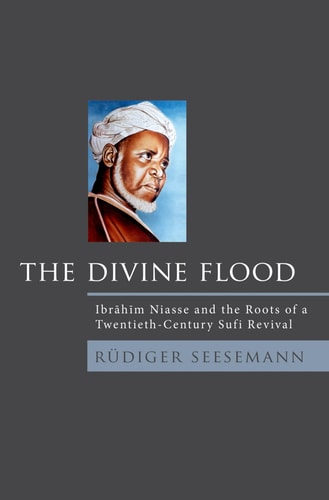
The Divine Flood: Ibrahim Niasse and the Roots of a Twentieth-Century Sufi Revival
Author Description
Until recently, academic studies of Sufism have largely ignored the multiple ways in which Islamic mystical ideas and practices have developed in the modern period. For many specialists, Sufism was "on the way out" and not compatible with modernity. The present study of a twentieth-century Sufi revival in West Africa offers critical corrections to this misconception. Seesemann's work revolves around the emergence and spread of the "Community of the Divine Flood," established in 1929 by Ibrahim Niasse, a leader of the Tijaniyya Sufi order from Senegal. Based on a wide variety of written sources and encounters with leaders and ordinary members of the movement, the book analyzes the teachings and practices of this community, most notably those concerned with mystical knowledge of God. It presents a vivid and intimate portrait of the community's formation in Senegal and its subsequent transformation into a veritable transnational movement in West Africa and beyond. Drawing on letters, poetry, hagiography, and testimonies of opponents of the movement, the book traces Niasse's spectacular ascension as the widely acclaimed "Supreme Saint of His Era" and shows how the various stages of his career intersect with the development of his mystical teachings. Seesemann makes a compelling case for studying Sufis and their literary production in their social and historical contexts, throwing light on a little known chapter of the intellectual and social history of Islam.
Menrva's Summary
THE THESIS
This study investigates how the twentieth-century emergence of the Community of the Divine Flood challenges the academic misconception that Sufism is incompatible with modernity. Rudiger Seesemann, an expert in Islamic studies, utilizes a diverse array of primary sources—including hagiographies, poetry, and personal testimonies—to reconstruct the life and influence of Ibrahim Niasse. The author argues that Niasse’s movement represents a significant, dynamic chapter in the intellectual and social history of West African Islam, rather than a declining tradition. By situating Niasse’s mystical teachings within their specific historical and social contexts, the work provides a rigorous framework for understanding the transnational expansion of the Tijaniyya order.
THE SCOPE MAP
What You Will Find
- A detailed historical analysis of the Tijaniyya Sufi order in twentieth-century Senegal and West Africa.
- An examination of the mystical teachings and practices central to the Community of the Divine Flood.
- A methodology incorporating letters, poetry, and hagiographical texts to document the movement's growth.
- A comprehensive study of the career and influence of Ibrahim Niasse as a transnational religious leader.
THE AUTHORITY PERSPECTIVE
Scholars in the field of Islamic studies identify this work as a foundational text for understanding modern Sufi movements in Africa. Readers frequently note the academic rigor and the depth of the archival research presented throughout the study.
Page Count:
331
Publication Date:
2011-08-01
Publisher:
Oxford University Press
ISBN-10:
0195384326
ISBN-13:
9780195384321
History
Biography
Religion
Islam
Tijaniyah Al-
West Africa
Sufism
Community Tags
Similar Books