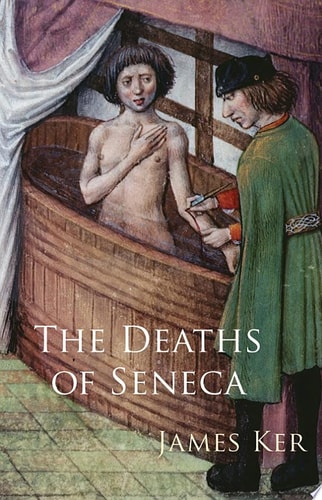
The Deaths of Seneca
0
0
As an Amazon Associate and affiliate partner, Menrva Books earns from qualifying purchases. Learn more
Author Description
The forced suicide of Seneca, former adviser to Nero, is one of the most tortured--and most revisited--death scenes from classical antiquity. After fruitlessly opening his veins and drinking hemlock, Seneca finally succumbed to death in a stifling steam bath, while his wife Paulina, who had attempted suicide as well, was bandaged up and revived by Nero's men. From the first century to the present day, writers and artists have retold this scene in order to rehearse and revise Seneca's image and writings, and to scrutinize the event of human death.In The Deaths of Seneca, James Ker offers the first comprehensive cultural history of Seneca's death scene, situating it in the Roman imagination and tracing its many subsequent interpretations. Ker shows first how the earliest accounts of the death scene by Tacitus and others were shaped by conventions of Greco-Roman exitus-description and Julio-Claudian dynastic history. At the book's center is an exploration of Seneca's own prolific writings about death--whether anticipating death in his letters, dramatizing it in the tragedies, or offering therapy for loss in the form of consolations--which offered the primary lens through which Seneca's contemporaries would view the author's death. These ancient approaches set the stage for prolific receptions, and Ker traces how the death scene was retold in both literary and visual versions, from St. Jerome to Heiner Müller and from medieval illuminations to Peter Paul Rubens and Jacques-Louis David. Dozens of interpreters, engaging with prior versions and with Seneca's writings, forged new and sometimes controversial views on Seneca's legacy and, more broadly, on mortality and suicide. The Deaths of Seneca presents a new, historically inclusive, approach to reading this major Roman author.
Menrva's Summary
THE THESIS
How has the death of the Roman philosopher Seneca been interpreted, reimagined, and utilized as a cultural touchstone from antiquity to the modern era? James Ker, a scholar of classical literature, examines the historical and literary afterlife of Seneca’s forced suicide under Nero. By analyzing primary accounts from Tacitus alongside Seneca’s own philosophical writings on mortality, Ker constructs a framework for understanding how the death scene functions as a mirror for shifting cultural attitudes toward suicide, legacy, and the act of dying itself.
THE SCOPE MAP
What You Will Find
- A detailed analysis of Greco-Roman exitus-description conventions and Julio-Claudian dynastic history.
- An exploration of Seneca’s own philosophical corpus, including his letters, tragedies, and consolations.
- A chronological survey of artistic and literary receptions, ranging from medieval illuminations to the works of Peter Paul Rubens and Jacques-Louis David.
- A critical investigation into the evolving moral and political debates surrounding suicide and human mortality.
THE AUTHORITY PERSPECTIVE
Scholars recognize this work as a comprehensive and rigorous study of classical reception history. Readers frequently note the academic density of the prose, which provides a thorough examination of both ancient texts and their subsequent artistic interpretations.
Page Count:
432
Publication Date:
2009-11-04
Publisher:
Oxford University Press
ISBN-10:
0195387031
ISBN-13:
9780195387032
Biography
History
Philosophy
Cultural History
Statesmen biography
Philosophers - Biography
Europe
Historical
Kindle eBooks
Kindle Store
Categories
Rome biography
Community Tags
Other Editions(4)


Similar Books










Reader Comments
Share Your Thoughts
No comments yet. Be the first to share your thoughts!