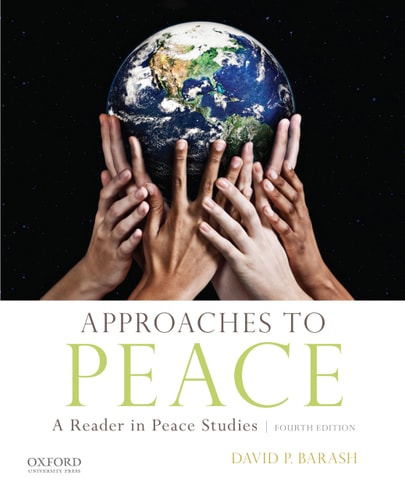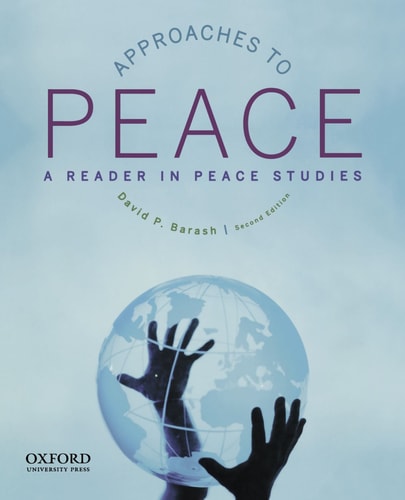
Approaches to Peace: A Reader in Peace Studies
0
0
As an Amazon Associate and affiliate partner, Menrva Books earns from qualifying purchases. Learn more
Author Description
"For those endeavoring to approach peace, there is no shortage of challenges, practical as well as intellectual. Fortunately, there is also no shortage of inspiration and insight."--From the prefaceApproaches to Peace: A Reader in Peace Studies, Second Edition, provides a unique and interdisciplinary sampling of key articles and short literary selections focusing on the diverse facets of peace and conflict studies. Featuring both classic and contemporary work, it enables students to read highly influential articles while also introducing them to the most current perspectives in the field. Timeless classics from Leo Tolstoy, the Bhagavad Gita, Martin Luther King, Jr., Gandhi, and Henry David Thoreau are included alongside contemporary pieces by Johan Galtung, Betty Reardon, and many others. Updated to address current concerns, the second edition incorporates seventeen new articles, including selections from Al Gore on climate change, Jeffrey Sachs on Third World economies, and Desmond Tutu on reconciliation. A new chapter on terrorism offers work from Eqbal Ahmad, Richard Falk, Samuel Huntington, and others.Ideal on its own as a foundation text in any introductory peace studies course, Approaches to Peace, Second Edition, is also compact enough to use as a supplement with more specialized readings. Each selection is prefaced by a short introduction highlighting the author's background, the work's historical context, and the selection's significance in terms of the "big picture." Study questions and a list of suggested readings at the end of each selection also provide useful resources for students.
Menrva's Summary
THE THESIS
This volume investigates the multifaceted nature of peace and conflict by synthesizing foundational philosophical texts with contemporary academic analysis. Author David P. Barash, a prominent scholar in the field, curates an interdisciplinary collection that bridges historical wisdom and modern geopolitical challenges. The text argues that understanding peace requires a broad engagement with diverse perspectives, ranging from ancient spiritual traditions to modern economic and environmental policy. By organizing these selections, Barash provides a structured framework for students to evaluate the mechanisms of conflict and the strategies for reconciliation.
THE SCOPE MAP
What You Will Find
- A diverse collection of classic and contemporary essays covering peace, conflict, and social justice.
- Pedagogical tools including study questions and suggested reading lists for each selection.
- Editorial introductions that provide historical context and biographical background for every author.
- Specialized thematic chapters addressing modern issues such as climate change, global economics, and terrorism.
THE AUTHORITY PERSPECTIVE
Educators frequently utilize this text as a foundational reader for introductory peace studies courses due to its breadth and accessibility. Experts note that the inclusion of both historical classics and contemporary commentary makes it a versatile resource for students navigating the complexities of international conflict.
Page Count:
304
Publication Date:
2009-08-10
Publisher:
Oxford University Press
ISBN-10:
0195382862
ISBN-13:
9780195382860
History
Sociology
International relations
Conflict Resolution
Peace studies