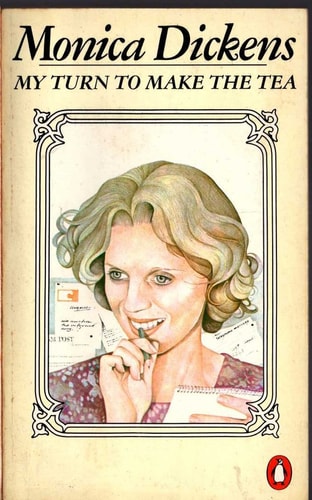
My Turn to Make the Tea
0
0
As an Amazon Associate and affiliate partner, Menrva Books earns from qualifying purchases. Learn more
Author Description
Poppy, newly recruited cub reporter at the Downingham Post, is determined to prove to the editor that he's wrong in his belief that 'Women are a nuisance in the office'. He certainly doesn't think she's a nuisance when it's time for the tea round - a job which never fails to fall to the only female reporter.What Poppy lacks in experience, she makes up for in spirit and ambition. She'll make the Downingham Post the best regional newspaper there is - even if she occasionally gets the names wrong in court hearings. Life, for a single professional woman in the post-war years, certainly has its challenges - from finding a room, when the tyrannical landlady doesn't consider Poppy to be quite respectable, to changing her editor's deeply entrenched ways. This semi-autobiographical novel, recounted with Monica Dickens's wit, warmth and wry observation, will charm all who read it.
Menrva's Summary
THE PULSE
Poppy, a determined cub reporter, enters the male-dominated environment of the Downingham Post with the goal of proving her professional worth despite the dismissive attitudes of her editor. Navigating the social and professional constraints of the post-war era, Poppy balances the mundane expectations of office life, such as the daily tea round, with her ambition to succeed as a journalist. She faces opposition from a skeptical editor and a rigid social structure that questions the place of a single professional woman. The narrative follows her attempts to establish credibility while managing the comedic errors of her early career. The story is presented through a semi-autobiographical lens, capturing the specific atmosphere of a regional newspaper office.
INSIDE THE PAGES
- First-person perspective reflecting the author's own experiences
- Workplace dynamics in a post-war regional newspaper
- Satirical look at gender roles and office politics
- Episodic structure detailing various reporting assignments
- Focus on the struggle for professional autonomy
- Exploration of housing and social respectability for single women
- Wry, observational tone regarding human behavior
- Character-driven development of the protagonist's career
THE COLLECTIVE ECHO
Readers frequently highlight the wit and charm embedded in the narrative, noting how the author captures the specific frustrations of a woman working in a male-dominated industry. Discussion often centers on the balance between the lighthearted comedic elements of the office mishaps and the more serious undertones regarding societal expectations of the time. Critics often point to the observational style as a hallmark of the author's ability to turn mundane daily life into an engaging story. The pacing is generally described as steady and character-focused, providing a clear window into the post-war professional landscape.
Page Count:
222
Publication Date:
1977-01-01
Publisher:
Penguin
ISBN-10:
0140017518
ISBN-13:
9780140017519
Historical Fiction
Humor
classic
Journalists
Post-War
Workplace