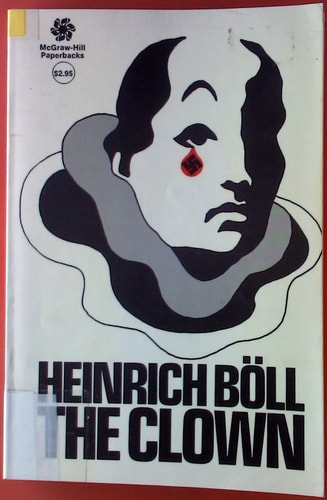
The Clown
0
0
As an Amazon Associate and affiliate partner, Menrva Books earns from qualifying purchases. Learn more
Author Description
Acclaimed entertainer Hans Schneir collapses when his beloved Marie leaves him because he won’t marry her within the Catholic Church. The desertion triggers a searing re-examination of his life—the loss of his sister during the war, the demands of his millionaire father and the hypocrisies of his mother, who first fought to “save” Germany from the Jews, then worked for “reconciliation” afterwards. Heinrich Böll’s gripping consideration of how to overcome guilt and live up to idealism—how to find something to believe in—gives stirring evidence of why he was such an unwelcome presence in post-War German consciousness... and why he was such a necessary one.
Menrva's Summary
THE PULSE
The sudden departure of his partner, Marie, forces Hans Schneir to confront the wreckage of his personal history and the moral failures of his society. As a professional clown, Hans navigates a world that demands performance while his internal state disintegrates into cynicism and isolation. He grapples with the lingering trauma of his sister's death during the war and the suffocating expectations of his wealthy, hypocritical family. The narrative unfolds through a series of phone calls and internal monologues, creating a claustrophobic atmosphere that mirrors his mental state. Hans attempts to reconcile his disillusionment with the rigid social structures of post-war Germany, specifically the influence of the Catholic Church and the shifting political allegiances of his parents.
INSIDE THE PAGES
- First-person stream-of-consciousness narrative
- Non-linear structure reflecting memory and trauma
- Satirical critique of post-war German societal hypocrisy
- Exploration of religious and familial alienation
- Use of the clown as a metaphor for the outsider
- Focus on the tension between idealism and reality
- Minimalist, stark prose style
- Examination of historical guilt and personal responsibility
THE COLLECTIVE ECHO
Discussion often centers on the effectiveness of the protagonist's voice as a vehicle for social critique. Readers frequently highlight the stark contrast between Hans's professional persona and his private despair, noting how this duality emphasizes the alienation inherent in his environment. Critics often point to the novel's biting portrayal of post-war German institutions, particularly the ease with which former political actors adapted to new social norms. The pacing is described as deliberate and introspective, favoring character depth over external plot progression. Many readers find the exploration of moral integrity in a compromised society to be the most enduring aspect of the work.
Page Count:
247
Publication Date:
1994-01-01
Publisher:
Penguin Classics
ISBN-10:
0070064202
ISBN-13:
9780070064201
Satire
Post-War
classic
Psychological
Classics
German