Cultural Geography
0
0
As an Amazon Associate and affiliate partner, Menrva Books earns from qualifying purchases. Learn more
Author Description
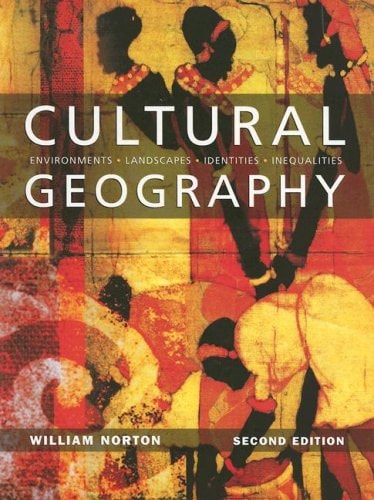
Cultural Geography, Second Edition, explores how cultural identities express themselves in the landscape. William Norton examines everything from Mormon temples to shopping malls, from war monuments to roadside memorials, from segregated beaches to gay pride parades. Landscapes emerge as sites of contestation and consumption, of oppression and exclusion, of sacred importance and ethnic pride, Cultural Geography reveals how people relate to place on a local, regional, and global scale. While covering the longstanding interests in ecology, landscape change, and cultural regions, which developed under the influence of Carl Sauer, the second edition of Cultural Geography also focuses on contemporary movements in the field. The 'new' cultural geography--informed by Marxist, feminist, humanist, and postmodernist concerns--challenges traditional ideas about humans and nature. Integrating physical and social science, Cultural Geography: Environments, Landscapes, Identities, and Inequalities, Second Edition, provides thoughtful and balanced coverage of this discipline in all its aspects, past and present.
Menrva's Summary
THE THESIS
This text investigates how cultural identities manifest within physical landscapes and how these spaces serve as sites of social, political, and economic contestation. William Norton, an established scholar in the field, synthesizes traditional geographical interests—such as landscape change and ecology—with contemporary theoretical frameworks. By integrating physical and social science, the book argues that landscapes are not merely passive settings but active participants in the construction of identity, inequality, and power dynamics.
THE SCOPE MAP
What You Will Find
- Analysis of diverse landscape types including religious sites, commercial spaces, and war monuments.
- Examination of the 'new' cultural geography influenced by Marxist, feminist, and postmodernist theories.
- Historical context regarding the influence of Carl Sauer on the development of the discipline.
- Exploration of how human-environment relations function across local, regional, and global scales.
THE AUTHORITY PERSPECTIVE
Experts recognize this work as a comprehensive introduction to the evolution of cultural geography, effectively bridging classical methodologies with modern critical theory. Students and academics frequently cite the text for its balanced approach to complex social issues and its clear articulation of how identity shapes the built environment.
Page Count:
464
Publication Date:
2005-09-22
Publisher:
Oxford University Press
ISBN-10:
0195419227
ISBN-13:
9780195419221
Geography
Sociology
Social Science
Anthropology
Community Tags
Similar Books