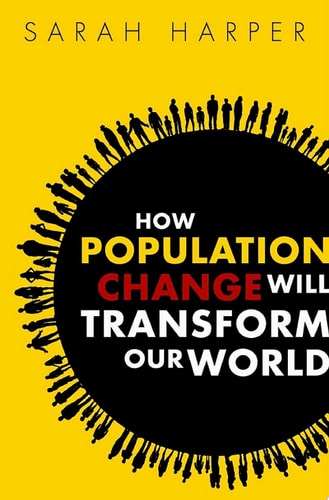
How Population Change Will Transform Our World
0
0
As an Amazon Associate and affiliate partner, Menrva Books earns from qualifying purchases. Learn more
Author Description
Predicting the shape of our future populations is vital for installing the infrastructure, welfare, and provisions necessary for society to survive. There are many opportunities and challenges that will come with the changes in our populations over the 21st century. In this new addition to the 21st Century Challenges series, Sarah Harper works to dispel myths such as the fear of unstoppable global growth resulting in a population explosion, or that climate change will lead to the mass movement of environmental refugees; and instead considers the future shape of our populations in light of demographic trends in fertility, mortality, and migration, and their national and global impact. How Population Change Will Transform Our World looks at population trends by region to highlight the key issues facing us in the coming decades, including the demographic inertia in Europe, demographic dividend in Asia, high fertility and mortality in Africa, the youth bulge in the Middle East, and the balancing act of migration in the Americas. Harper concludes with an analysis of global challenges we must plan for such as the impact of climate change and urbanization, and the difficulty of feeding 10 billion people, and considers ways in which we can prepare for, and mitigate against, these challenges.
Menrva's Summary
THE THESIS
This book investigates how shifting global demographic trends in fertility, mortality, and migration will fundamentally reshape societal infrastructure and welfare systems throughout the 21st century. Sarah Harper, a professor of gerontology and expert in population change, utilizes current demographic data to challenge common misconceptions regarding population explosions and mass environmental migration. She presents a framework that emphasizes regional demographic realities to argue for proactive planning in the face of urbanization and resource scarcity.
THE SCOPE MAP
What You Will Find
- Regional analysis of demographic trends in Europe, Asia, Africa, the Middle East, and the Americas
- Examination of the demographic dividend and youth bulge phenomena
- Assessment of global challenges including climate change, urbanization, and food security
Scope Limits
- Does not provide specific policy blueprints for individual nations
- Does not offer speculative science fiction scenarios regarding future population collapse
THE AUTHORITY PERSPECTIVE
Experts recognize this work as a clear, accessible synthesis of complex demographic data for a general audience. Readers frequently note the balance between regional specificity and global thematic analysis, making it a useful primer for understanding 21st-century societal pressures.
Page Count:
256
Publication Date:
2016-01-01
Publisher:
OUP Oxford
ISBN-10:
019108669X
ISBN-13:
9780191086694
Economics
Medical
Public Policy
DemographyPopulation
Global Studies
Sociology
Allied Health
Demography
Community Tags
Other Editions(4)


Similar Books