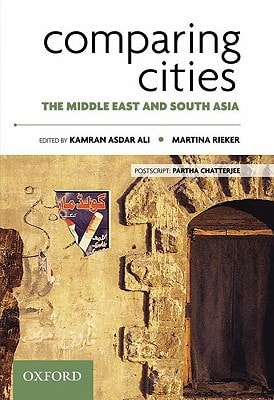
Comparing Cities: The Middle East and South Asia
0
0
As an Amazon Associate and affiliate partner, Menrva Books earns from qualifying purchases. Learn more
Author Description
This book highlights the changing social dynamics in Middle Eastern and South Asian cities. The comparative framework builds on a shared history of the colonial encounter, modernity, nationalism and urbanity and is further deepened by the larger framework of Muslim culture that influences social life in both spaces. The various chapters rethink the gendered dimension of public spaces and investigate the relationship between the popular and the political in these regions. They also take into account how larger structural changes in South Asia/ Middle East have impacted the practices and experiences of people.This focus addresses the lack of social histories that explore urban life-worlds in an era of de-industrialization and major structural changes that are available for many cities in other regions of the world. Hence, It provides an interdisciplinary analysis that informs us about how transnational flows of ideas and resources shape certain responses to deprivation and marginality, yet also encourage political passivity and inaction. Raising such questions in a comparative context is essential to refocus research agendas and to inspire new studies. The volume is unique as, for the first time, it puts the field of urban studies within the two regions in a dialogue with each other and with similar efforts across the globe.
Menrva's Summary
THE THESIS
This volume investigates how shifting social dynamics, colonial legacies, and modern urban development have reshaped the lived experiences of populations across the Middle East and South Asia. Authors Kamran Asdar Ali and Martina Rieker utilize an interdisciplinary framework to examine how transnational flows of ideas and structural economic changes influence urban life-worlds. By placing these two regions in direct dialogue, the authors challenge existing academic gaps regarding de-industrialization and marginality in non-Western urban centers.
THE SCOPE MAP
What You Will Find
- Comparative analysis of urban social dynamics in Middle Eastern and South Asian cities
- Examination of the gendered dimensions of public spaces
- Investigation into the intersection of popular culture and political action
- Assessment of how structural economic shifts impact local practices and responses to deprivation
THE AUTHORITY PERSPECTIVE
Experts recognize this volume as a significant contribution to comparative urban studies, particularly for its effort to bridge the gap between regional research agendas. Readers frequently note the academic density of the prose, which serves as a foundational text for scholars interested in the intersection of post-colonial history and contemporary urban sociology.
Page Count:
372
Publication Date:
2010-01-18
Publisher:
Oxford University Press
ISBN-10:
0195474988
ISBN-13:
9780195474985
History
Middle East
Sociology
Cities And Towns
Urban Studies
Community Tags
Similar Books