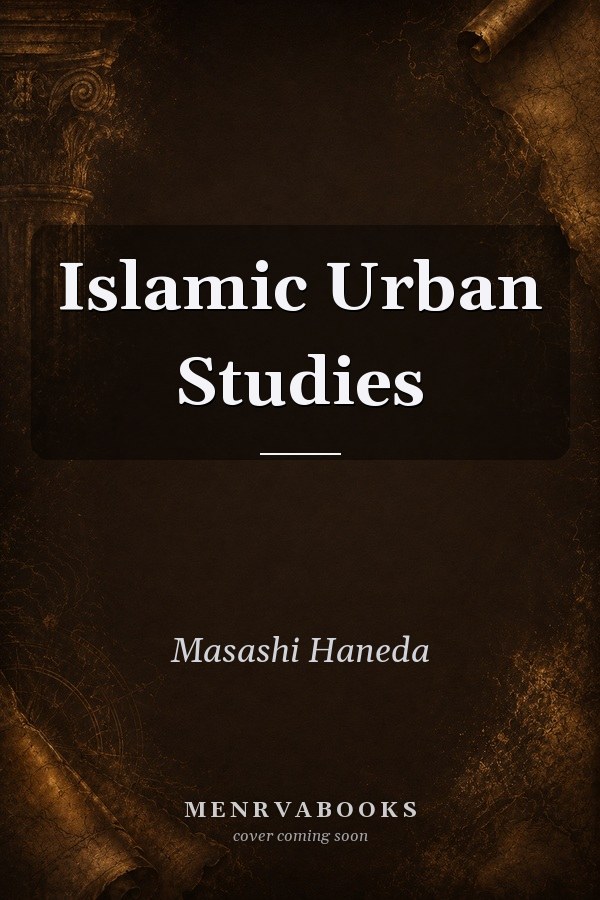
Islamic Urban Studies
0
0
As an Amazon Associate and affiliate partner, Menrva Books earns from qualifying purchases. Learn more
Author Description
The history of urban studies concerning the Islamic world in terms of theme, motif and methodology is the subject of this innovative work. While previous studies have tended to link the cities of the Islamic world with Islam as a religion and culture in an attempt to understand them as a whole in a unified and uniform way, there have been very few attempts to examine and compare the cities in their diversity of climate, landscape, population and historical background, which is the approach taken here. The study has two foci. First, it coordinates the main research that has been done since the 19th century in regard to the cities of five regions that came under the sway of Islam comparatively early: the Maghrib (the Western Arab lands), the Mashriq (the Eastern Arab lands), Turkey, Iran and Central Asia. Second, through comparing the history of scholarship regarding the cities of these five regions, it throws light on the issues that have exercised academic concern in urban studies of the Islamic world as a whole to the present, and suggests new perspectives for future work. Such a survey of the history of scholarship covering the vast area of the Middle East has not been undertaken previously, which speaks of the difficulty and significance of the project. This challenging work, which arises from the large 'Urbanism in Islam: A Comparative Study' project centred on the Institute of Oriental Culture at the University of Tokyo, has been undertaken in the firm conviction that if no attempt is made to consolidate and examine the existing scholarship on the field, it will be impossible to understand truly the cities of the Islamic world. Apart from the unique contribution it makes to Islamic urban studies, the volume has wider applications to the fields of urban studies and history in general.
Menrva's Summary
THE THESIS
This work investigates the historical evolution of urban studies within the Islamic world by challenging the traditional tendency to view these cities through a monolithic religious lens. Authors Masashi Haneda and Toru Miura, affiliated with the Institute of Oriental Culture at the University of Tokyo, synthesize over a century of academic research to propose a comparative methodology. By analyzing the diverse environmental, demographic, and historical factors of five distinct regions, the authors argue for a more nuanced understanding of urban development that moves beyond cultural uniformity.
THE SCOPE MAP
What You Will Find
- A comparative analysis of urban development across the Maghrib, Mashriq, Turkey, Iran, and Central Asia.
- A historiographical survey of academic research on Islamic cities dating from the 19th century to the present.
- A methodological framework for evaluating urbanism that accounts for climate, landscape, and historical context.
- An assessment of the challenges and future trajectories for scholars working within the field of Islamic urban studies.
THE AUTHORITY PERSPECTIVE
Experts recognize this volume as a significant contribution to the field due to its unprecedented scope in consolidating disparate regional scholarship. Readers frequently note the academic density of the prose, which serves as a foundational reference for researchers seeking to understand the evolution of urban studies in the Middle East.
Page Count:
0
Publication Date:
2013-01-01
Publisher:
Taylor & Francis Group
ISBN-10:
0203038568
ISBN-13:
9780203038567
History
Islamic Studies
Middle East
Urban Studies
Cities And Towns
Sociology
Community Tags
Similar Books