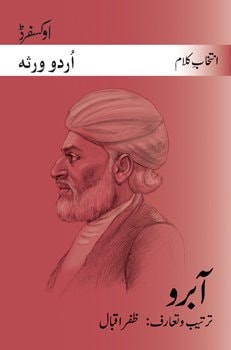
Selected Poetry of Abroo
0
0
As an Amazon Associate and affiliate partner, Menrva Books earns from qualifying purchases. Learn more
Author Description
Product description This book contains selections from Shah Mubarak Abroo (1683-1733), the most prominent North Indian poet of Eighteenth century. He was born in 1683 at Gwalior. His full name was Najam ud Din Shah Mubarak and his 'nom de plume' was Abroo. He was the grandson of the famous saint Muhammad Ghaus Gwaliori. Delhi was the centre of literary activities at that time. So he moved to Delhi, where he spent the rest of his life and died in 1733. A notable part of his works consist of mystic poetry, likely because he was from a mystic family. Most of his poetry consists of Ghazals but he also wrote Masnavis, Marsiyah and Mokhammas also. One of his Masnavi, Dar Mau''izah Ara'ish Ma'shooq is a written description of an important cultural rite. About the Author Shah Mubarak Abroo (1683-1733), was the most prominent North Indian poet of Eighteenth century. He was born in 1683 at Gwalior. His full name was Najam ud Din Shah Mubarak and his 'nom de plume' was Abroo. He was the grandson of the famous saint Muhammad Ghaus Gwaliori. Dr. Zafar Iqbal has an MA and PhD from the University of Karachi. He is Professor and Chairman of the Department of Urdu, University of Karachi and an eminent critic of Urdu literature with experience in editing texts of earlier poets directly from manuscripts. More than 35 of his research articles have been published in national and international research journals. He is the author of 5 books.
Menrva's Summary
THE THESIS
This volume investigates the literary contributions and historical significance of Shah Mubarak Abroo, a central figure in eighteenth-century North Indian poetry. Dr. Zafar Iqbal, a scholar and professor of Urdu literature, utilizes his expertise in manuscript editing to curate this selection of Abroo's work. The text provides a critical framework for understanding how Abroo's mystic background and life in Delhi influenced the development of classical Urdu poetic forms.
THE SCOPE MAP
What You Will Find
- A curated selection of Ghazals, Masnavis, Marsiyah, and Mokhammas poetry.
- Historical context regarding the literary environment of eighteenth-century Delhi.
- Biographical analysis of Shah Mubarak Abroo's lineage and personal history.
- Critical commentary on specific works such as the Masnavi, Dar Mau'izah Ara'ish Ma'shooq.
THE AUTHORITY PERSPECTIVE
Scholars and students of Urdu literature recognize this text as a valuable resource for accessing the works of a foundational poet through a modern critical lens. The inclusion of editorial notes by an experienced academic makes this a reliable reference for those studying the evolution of North Indian poetic traditions.
Page Count:
64
Publication Date:
2010-01-01
Publisher:
Oxford University Press
ISBN-10:
0195478177
ISBN-13:
9780195478174
Biography
Poetry
Literary Criticism
English poetry
Classical
Urdu
Community Tags
Similar Books