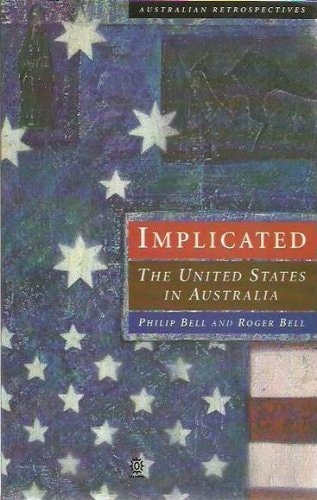
Implicated: The United States in Australia
0
0
As an Amazon Associate and affiliate partner, Menrva Books earns from qualifying purchases. Learn more
Author Description
America is deeply implicated in Australia's economic, political and cultural history. Although it has not simply imposed on Australia a version of itself nor made Australia a dependent "Americanized" satellite, the U.S. has remained an ambiguous model, a promise as well as a threat, to the smaller Pacific nation since well before its Federation. Despite the decline of American power and the end of the Cold War, the implications of American power and example continue to color Australia's political and social identity. This book examines the various ways by which Australia negotiated military alliances, economic accommodations and cultural meanings with the U.S. as both societies traveled the path of modernization.
Menrva's Summary
THE THESIS
This book investigates the complex, enduring influence of the United States on Australia's economic, political, and cultural development from the pre-Federation era to the post-Cold War period. Authors Philip W. Bell and Roger Bell utilize a historical framework to analyze how Australia has navigated its relationship with a dominant global power while maintaining its own national identity. The text argues that the U.S. has functioned as both an aspirational model and a geopolitical threat, shaping Australian modernization through military, economic, and social channels.
THE SCOPE MAP
What You Will Find
- Analysis of military alliances and defense strategies between the two nations
- Examination of economic accommodations and trade dependencies
- Exploration of cultural exchanges and the impact of Americanization on Australian identity
- Historical overview of diplomatic relations from the late 19th century through the late 20th century
THE AUTHORITY PERSPECTIVE
Scholars and historians recognize this work as a significant contribution to the study of Australian-American relations, particularly for its nuanced rejection of simple dependency theories. Readers frequently note the academic rigor of the authors' analysis, which provides a balanced view of how smaller nations negotiate power dynamics with global hegemons.
Page Count:
240
Publication Date:
1994-01-27
Publisher:
Oxford University Press
ISBN-10:
0195535146
ISBN-13:
9780195535143
History
United States
Australian History
American History
International relations
Community Tags
Similar Books














