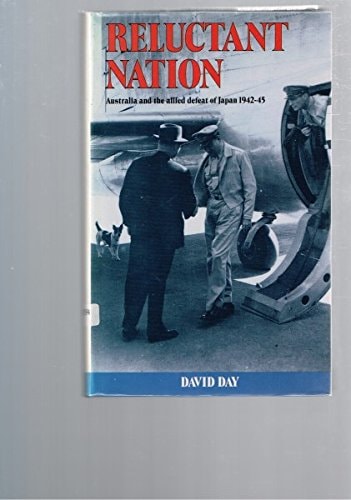
Reluctant Nation: Australia and the Allied Defeat of Japan 1942-45
0
0
As an Amazon Associate and affiliate partner, Menrva Books earns from qualifying purchases. Learn more
Author Description
This book deals with a vital period in the history of the modern world as the Second World War spread into the Pacific, engulfing the European empires and dragging the United States into the war. The present political geography of the Pacific was established during these years as the Allies fought Japan. The Allies also were busy keeping a wary eye on each other as they jostled for post-war dominance. Despite repeated assurances by Churchill, Britain fought a limited war in the Pacific. Britain was seeking a limit to the political fall-out from the Singapore disaster of 1942 and and had a interest in recovering the Far East empire. In the final analysis, England chose to maximize reconstruction effort at home rather than to fulfil commitments to the war against Japan. Australia had imperial dreams of its own. Based on the strength of a new munitions industry and greatly expanded armed forces, Australia's dream depended on guarantees of Anglo-American support that were never forthcoming. Australia soon found that grandiose ambitions outran the limited capacity to achieve them. As with Britain, the political attractions of domestic reconstruction overshadowed territorial ambitions. Even the United States, the new power-broker in the Pacific, found its ability to shape the region was limited. Based on extensive use of private diaries and confidential papers, Day has written a wide-ranging reinterpretation of the Pacific War that deserves to be read by all those seeking to understand these explosive events.
Menrva's Summary
THE THESIS
This work investigates the complex geopolitical tensions and strategic misalignments between Australia, Great Britain, and the United States during the Pacific theater of the Second World War. David Day, a noted historian, utilizes a wealth of primary source material, including confidential government papers and private diaries, to challenge traditional narratives of Allied cooperation. He argues that national self-interest and domestic reconstruction priorities frequently superseded collective military objectives, leading to a fractured and often competitive alliance structure.
THE SCOPE MAP
What You Will Find
- Detailed analysis of the strategic shift in the Pacific from 1942 to 1945.
- Examination of the political fallout following the fall of Singapore.
- Comparative study of British, American, and Australian post-war imperial and regional ambitions.
- Evidence derived from private diaries and previously confidential government archives.
THE AUTHORITY PERSPECTIVE
Historians and scholars of the Pacific War frequently cite this text for its rigorous re-evaluation of Allied diplomatic relations. Readers often note the academic density of the prose, which provides a comprehensive look at the friction between national interests and wartime necessity.
Page Count:
384
Publication Date:
1992-05-28
Publisher:
Oxford University Press
ISBN-10:
0195532422
ISBN-13:
9780195532425
History
Australian History
Asian Studies
Military History
Pacific War
Political History
Community Tags
Similar Books