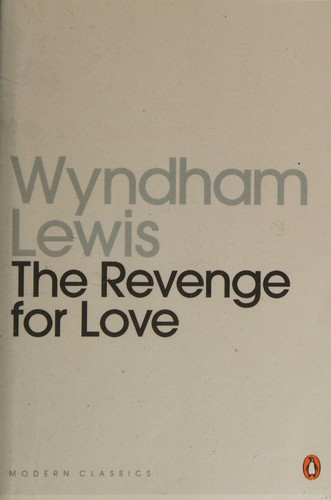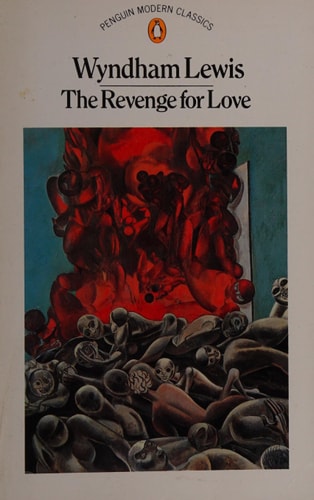
The Revenge for Love
0
0
As an Amazon Associate and affiliate partner, Menrva Books earns from qualifying purchases. Learn more
Author Description
Published in the shadow of the Spanish Civil War, The Revenge for Love is a political thriller attacking the fraudulence and feeble-mindedness of life in the Britain of the 1930s. A brilliant satire on a world that has lost its sense of self and been seduced by the appeal of Communism, it is one of a handful of books (it could be compared to Orwell's Coming Up for Air or Koestler's Darkness at Noon) which defined a particular mood and to today's audience gives an unparalleled sense of how Europe turned toxic on the eve of the Second World War. A major statement by a great artist and writer The Revenge for Love now deserves a new generation of readers and is the perfect introduction to Lewis's work.
Menrva's Summary
THE PULSE
The narrative centers on the intersection of political idealism and personal deception against the volatile backdrop of 1930s Britain and the Spanish Civil War. The protagonist navigates a landscape defined by ideological fervor and the erosion of individual integrity, as characters become entangled in the machinations of political movements. The narrative framework employs a sharp, observational lens to examine the disconnect between revolutionary rhetoric and the reality of human behavior. The primary conflict arises from the tension between the characters' performative commitments to political causes and the underlying fragility of their personal motivations.
INSIDE THE PAGES
- Satirical critique of 1930s British political culture
- Exploration of the allure and consequences of Communism
- Examination of the psychological impact of political radicalization
- Detailed depiction of the pre-World War II European atmosphere
- Focus on the theme of fraudulence in intellectual circles
- Complex character dynamics driven by ideological conflict
- Stylistic emphasis on irony and social commentary
- Narrative structure that mirrors the instability of the era
THE COLLECTIVE ECHO
Readers and critics frequently compare this work to the political fiction of George Orwell and Arthur Koestler due to its sharp focus on the ideological climate of the 1930s. Discussion often centers on the author's biting satirical style and his uncompromising critique of the intellectual trends of his time. Many highlight the book's effectiveness in capturing the toxic atmosphere of Europe on the brink of the Second World War. The narrative is noted for its intellectual density and its refusal to offer easy moral resolutions for its characters. Readers often find the work to be a significant, if challenging, entry point into the author's broader literary contributions.
Page Count:
400
Publication Date:
1972-01-04
Publisher:
Penguin Classic
ISBN-10:
0140033688
ISBN-13:
9780140033687
Historical Fiction
Satire
20th Century
classic
Political fiction