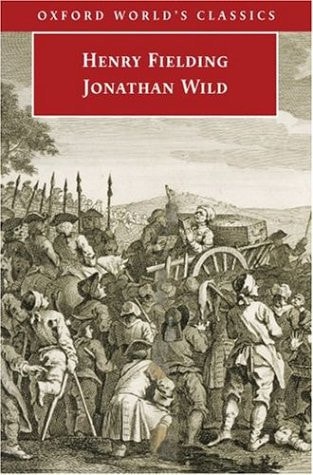
Jonathan Wild
0
0
As an Amazon Associate and affiliate partner, Menrva Books earns from qualifying purchases. Learn more
Author Description
The real-life Jonathan Wild, gangland godfather and self-styled "Thieftaker General", controlled much of the London underworld until he was executed for his crimes in 1725. Even during his lifetime his achievements attracted attention; after his death balladeers sang of his exploits, and satirists made connections between his success and the triumph of corruption in high places. Fielding built on these narratives to produce one of the greatest sustained satires in the English language. Published in 1743, at a time when the modern novel had yet to establish itself as a fixed literary form, Jonathan Wild is at the same time a brilliant black comedy, an incisive political satire, and a profoundly serious exploration of human "greatness" and "goodness", as relevant today as it ever was.
Menrva's Summary
THE PULSE
The narrative follows the rise and fall of Jonathan Wild, a criminal mastermind whose pursuit of 'greatness' serves as a mirror for the corruption of the political elite. The protagonist operates within the grimy, lawless underworld of 18th-century London, utilizing a network of thieves and informants to maintain his status as the 'Thieftaker General.' His primary opposition arises from the inherent instability of his criminal empire and the moral scrutiny of the narrator, who maintains a detached, ironic distance. The story is presented through a third-person perspective that employs heavy irony to contrast Wild's self-perception with his actual moral bankruptcy.
INSIDE THE PAGES
- Use of sustained irony to critique political figures
- Picaresque narrative structure following a criminal protagonist
- Exploration of the dichotomy between 'greatness' and 'goodness'
- Satirical commentary on the judicial and social systems of the era
- Incorporation of historical figures and events from the 1720s
- Meta-fictional elements that challenge the reader's moral judgment
- Dark comedic tone applied to violent and criminal subject matter
- Stylistic experimentation characteristic of early novel development
THE COLLECTIVE ECHO
Discussion often centers on the effectiveness of Fielding's irony in exposing the parallels between common criminals and high-ranking politicians. Readers frequently highlight the sharp, biting wit that permeates the text, noting how it forces a re-evaluation of societal definitions of success. Critics often point to the book as a foundational example of the satirical novel, praising its ability to maintain a consistent tone throughout the protagonist's descent. The work is widely recognized for its intellectual rigor and its refusal to offer the reader an easy moral resolution. Many readers appreciate the historical context provided in modern editions, which helps clarify the specific political targets Fielding intended to lampoon.
Page Count:
352
Publication Date:
2004-04-08
Publisher:
Oxford University Press
ISBN-10:
0192804081
ISBN-13:
9780192804082
Historical Fiction
Satire
Political fiction
18th century
classic
Picaresque