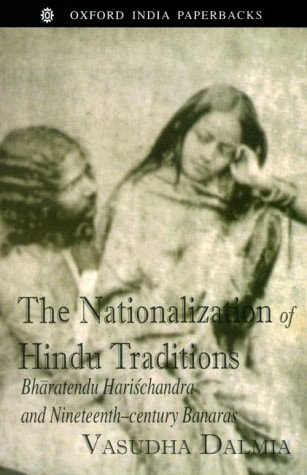
The Nationalization of Hindu Traditions: Bhāratendu Hariśhchandra and Nineteenth-century Banaras
0
0
As an Amazon Associate and affiliate partner, Menrva Books earns from qualifying purchases. Learn more
Author Description
This volume studies how a dominant strand of Hinduism in north India--the tradition which uses and misuses the slogan "Hindi-Hindu-Hindustan"--came into being in the late nineteenth century. It examines the life and writings of one major Hindi writer of the nineteenth century--the playwright, journalist, and polemicist Bharatendu Harishchandra (often called the "Father of Modern Hindi")--as its focal point for an analysis of some of the vital cultural processes through which modern north India came to be formed.
Menrva's Summary
THE THESIS
This volume investigates the historical construction of the 'Hindi-Hindu-Hindustan' identity in nineteenth-century North India through the lens of the influential writer Bhāratendu Hariśhchandra. Vasudha Dalmia, a scholar of modern Indian culture, utilizes a multidisciplinary approach that combines literary analysis, historical research, and sociological inquiry. By focusing on the life and polemical writings of Hariśhchandra, the author argues that modern North Indian cultural identity was not an ancient, static phenomenon but a deliberate, evolving construct shaped by specific intellectual and political processes during the colonial era.
THE SCOPE MAP
What You Will Find
- An examination of the socio-political climate of nineteenth-century Banaras.
- A detailed analysis of the literary and journalistic contributions of Bhāratendu Hariśhchandra.
- Historical investigation into the emergence of the 'Hindi-Hindu-Hindustan' ideological framework.
- Exploration of the cultural processes that defined modern North Indian identity.
THE AUTHORITY PERSPECTIVE
Scholars and historians recognize this work as a foundational text for understanding the intersection of language, religion, and nationalism in colonial India. Readers frequently note the academic density of the prose, which provides a rigorous examination of the cultural shifts that continue to influence contemporary Indian discourse.
Page Count:
504
Publication Date:
1999-07-22
Publisher:
Oxford University Press
ISBN-10:
0195648560
ISBN-13:
9780195648560
Biography
History
Religion
India religion
India
Hindus india
Nationalism
Literary Criticism
Hinduism
Community Tags
Similar Books