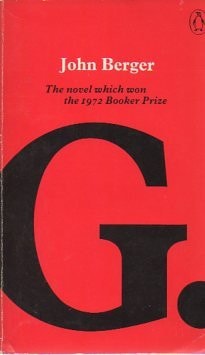
G.
0
0
As an Amazon Associate and affiliate partner, Menrva Books earns from qualifying purchases. Learn more
Author Description
Fascinating... an extraordinary mixture of historical detail and sexual meditation... G. belongs in the tradition of George Eliot, Tolstoy, D. H. Lawrence and Norman Mailer. The New York Times In this luminous novel -- winner of Britain's prestigious Booker Prize -- John Berger relates the story of G. a young man forging an energetic sexual career in Europe during the early years of this century. With profound compassion, Berger explores the hearts and minds of both men and women, and what happens during sex, to reveal the conditions of the Don Juan's success: his essential loneliness, the quiet cumulation in each of his sexual experiences of all of those that precede it, the tenderness that infuses even the briefest of his encounters, and the way women experience their own extraordinariness through their moments with him. All of this Berger sets against the turbulent backdrop of Garibaldi and the failed revolution of Milanese workers in 1898, the Boer War, and the first flight across the Alps, making G. a brilliant novel about the search for intimacy in history's private moments.
Menrva's Summary
THE PULSE
The protagonist, G., navigates the social and political upheavals of early 20th-century Europe while pursuing a series of intense, transformative sexual encounters. G. seeks to define his identity through these intimate connections, constantly clashing with the rigid societal expectations and the looming shadows of historical conflict. The narrative operates through a non-linear, fragmented structure that mirrors the instability of the era. Berger employs a shifting perspective to examine the physical and psychological consequences of G.'s actions on both himself and the women he encounters, grounding the character's personal development within the broader, often violent, historical context of the period.
INSIDE THE PAGES
- Non-linear narrative structure
- Interweaving of personal intimacy with historical events
- Philosophical meditation on the nature of sexual experience
- Shifting narrative perspectives
- Integration of historical figures and movements like Garibaldi
- Focus on the intersection of private life and public history
- Stylistic experimentation with prose form
- Exploration of loneliness and human connection
THE COLLECTIVE ECHO
Readers and critics frequently note the dense, philosophical nature of the prose, which prioritizes thematic exploration over traditional plot progression. Discussion often centers on the effectiveness of Berger's attempt to map the private lives of individuals against the backdrop of major historical shifts. Many highlight the book's unique approach to character development, where the protagonist serves as a conduit for broader meditations on desire and history. The pacing is often described as deliberate and reflective, requiring significant engagement from the reader to fully grasp the interconnectedness of the narrative threads. Overall, the work is recognized for its intellectual ambition and its refusal to adhere to conventional storytelling structures.
Page Count:
400
Publication Date:
1973-01-01
Publisher:
Penguin Books Ltd
ISBN-10:
0140034749
ISBN-13:
9780140034745
History
Literary Fiction
Fiction
Historical Fiction
European
Modernist
Experimental