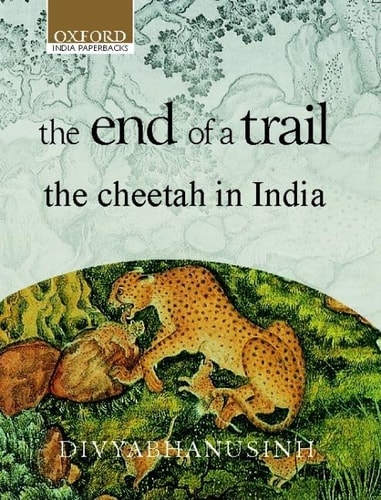
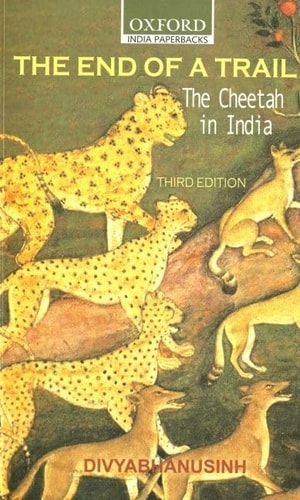
The End of a Trail: The Cheetah in India
0
0
As an Amazon Associate and affiliate partner, Menrva Books earns from qualifying purchases. Learn more
Author Description
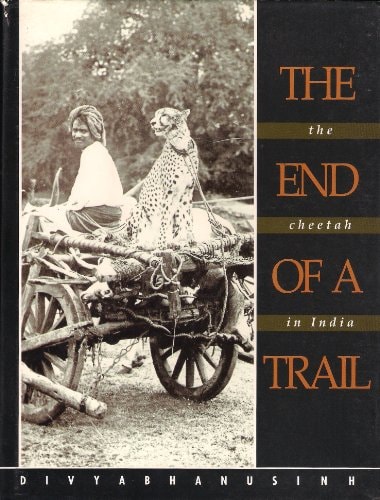
This is a pictorial history of the cheetah in India from the pre-historic period to the present. It provides a comprehensive account of the animal's interaction with man through the ages, reconstructing the life of the cheetah in captivity and its use by Indian royalty as an aid to hunting. Divyabhanusinh examines anew the process of the Indian cheetah's decline in the nineteenth and twentieth centuries, charting its path to extinction and analysing the causes of its disappearance. In this impression, the 'Epilogue 2001' provides a complete update on the information in the book, including detailed new findings on the evolution of cheetahs from Africa and Asia. It also gives fresh evidence about the sadly declining numbers of cheetah in Iran, and the existence, albeit not very optimistic, of the animal in Pakistan and Afghanistan. The epilogue also documents cases of the killing of the cheetah for rewards, a practice performed in British India, leading to its extermination. Finally, the author proposes a reintroduction of the cheetah in a select part of India. But if the cheetah is to survive at all on the Indian subcontinent, it will require the unconditional support of the governments of India, Iran, and Pakistan. The author mines a wide range of sources -- from prehistoric cave paintings, Sanskrit, Classical Greek and Roman literature to Mughal miniature paintings, rare photographs, shikar literature of the British Raj, and interviews. Containing several illustrated book is an indispensable reference work and has led to a renewed interest in the cheetah's reintroduction in India.
Menrva's Summary
THE THESIS
This work investigates the historical trajectory of the cheetah in India, examining the factors that led to its eventual extinction on the subcontinent. Divyabhanusinh, a member of the Species Survival Commission, utilizes a multidisciplinary approach to synthesize historical records, artistic depictions, and biological data. The text argues that human interaction, particularly the practices of Indian royalty and British colonial policies, played a decisive role in the species' decline while proposing a framework for potential reintroduction.
THE SCOPE MAP
What You Will Find
- A comprehensive historical timeline spanning from prehistoric periods to the early 21st century.
- Analysis of the cheetah's role in Indian royal hunting traditions and the impact of British-era bounty programs.
- Evidence derived from diverse sources including Sanskrit texts, Mughal miniature paintings, and rare archival photographs.
- An updated assessment of cheetah populations in Iran, Pakistan, and Afghanistan alongside conservation strategies.
THE AUTHORITY PERSPECTIVE
Experts and reviewers recognize this work as a foundational reference for understanding the ecological history of the Indian cheetah. Readers frequently note the extensive archival research and the value of the visual documentation provided throughout the text.
Page Count:
300
Publication Date:
2002-01-03
Publisher:
Oxford University Press
ISBN-10:
0195658914
ISBN-13:
9780195658910
History
Nature
India
Cheetah
Zoology
Wildlife
Conservation
Community Tags
Other Editions(3)
Similar Books




Reader Comments
Share Your Thoughts
No comments yet. Be the first to share your thoughts!