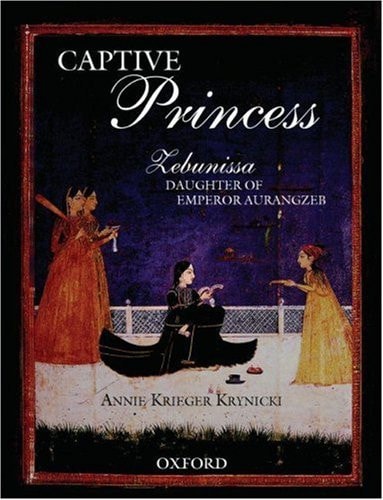
Captive Princess: Zebunissa, Daughter of Emperor Aurangzeb
0
0
As an Amazon Associate and affiliate partner, Menrva Books earns from qualifying purchases. Learn more
Author Description
The book revolves around Princess Zebunissa (1638-1702) who is defined as the symbol of female power of the Mughal dynasty and portrays their stature in the court life in the seventeenth century.In those days, the Mughal empire was at its zenith and famous in the world for its magnificence and wealth. Princesses were adorned with diamonds, dressed in clothes embroidered in gold and showered with exquisite luxury. They were the true patrons of art and loved books. She also contributed tothe architecture by way of mosques and edifices and played the role of a political and social advisor.The book shows the Mughal way of life and sketches the political and religious organization of the empire under Shah Jehan's reign and the austere government of Aurangzeb, the princess' father. The filigree of Zebunissa's life holds debates about her religious beliefs. The prism of her knowledgeexpanded to the study of calligraphy, Sufism and poetry. By giving herself a pen name Makhfi "The hidden," which had become an amusing and paradoxical disguise, she used it to moderate the 'Light of the World'. For her the name signified a life dramatically suppressed, cut off from the world.Her mysterious and unexpected imprisonment is also described in this book: Zebunissa's fate changed drastically when she was sent to prison by her father Aurangzeb, where she died leaving a landmark near the Red Fort of Delhi.
Menrva's Summary
THE THESIS
This work investigates the life and political influence of Princess Zebunissa, examining her role as a symbol of female power within the seventeenth-century Mughal dynasty. Annie Krieger Krynicki utilizes historical records to reconstruct the environment of the Mughal court during the reigns of Shah Jehan and Aurangzeb. The text argues that despite the constraints placed upon her, Zebunissa exerted significant influence as a patron of the arts, a political advisor, and a scholar of Sufism and poetry. By analyzing her transition from a life of extreme luxury to one of imprisonment, the author provides a framework for understanding the intersection of gender, power, and religious austerity in the Mughal empire.
THE SCOPE MAP
What You Will Find
- Detailed examination of the seventeenth-century Mughal court hierarchy and social organization.
- Analysis of the political and religious shifts between the reigns of Shah Jehan and Aurangzeb.
- Exploration of the cultural contributions of Mughal princesses, including architectural patronage and literary pursuits.
- Historical account of Zebunissa's intellectual development, her use of the pen name Makhfi, and her eventual imprisonment.
THE AUTHORITY PERSPECTIVE
Scholars and readers note that this text provides a focused look at the domestic and political realities of Mughal royal women. The book is frequently cited for its detailed contextualization of the era's religious and social tensions.
Page Count:
240
Publication Date:
2006-02-09
Publisher:
Oxford University Press
ISBN-10:
0195798376
ISBN-13:
9780195798371
Biography
History
Mughal Empire
India
Princesses
Community Tags
Similar Books