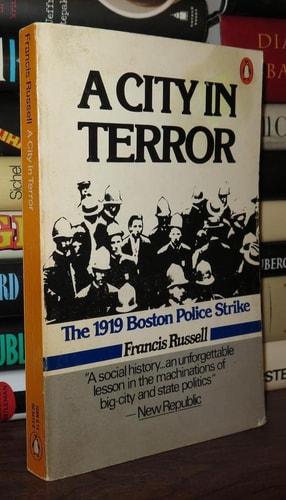
A City in Terror: The 1919 Boston Police Strike
0
0
As an Amazon Associate and affiliate partner, Menrva Books earns from qualifying purchases. Learn more
Author Description
On September 9, 1919, an American nightmare came true. The entire Boston police force deserted their posts, leaving the city virtually defenseless. Women were raped on street corners, stores were looted, and pedestrians were beaten and robbed while crowds not only looked on but cheered.The police strike and the mayhem that followed made an inconspicuous governor, Calvin Coolidge, known throughout America, turning him into a national hero and, eventually, a president. It also created a for two days, more than 700,000 residents of Boston's urban core were without police protection, and the mob ruled the streets.
Menrva's Summary
THE THESIS
This work investigates the 1919 Boston Police Strike as a pivotal moment of civil collapse and political transformation in early 20th-century America. Francis Russell, a historian specializing in New England history, utilizes primary accounts and archival records to reconstruct the two-day period of lawlessness that gripped Boston. The text argues that the strike served as a catalyst for the rise of Calvin Coolidge, whose decisive response to the chaos propelled him from a local official to a national political figure.
THE SCOPE MAP
What You Will Find
- Detailed timeline of the events occurring on September 9, 1919.
- Analysis of the labor conditions and grievances that led to the police walkout.
- Examination of the political fallout and the subsequent impact on the 1920 presidential election.
Scope Limits
- The book does not provide an exhaustive history of the entire Boston Police Department.
- It does not offer a comprehensive biography of Calvin Coolidge beyond his involvement in the strike.
THE AUTHORITY PERSPECTIVE
Historians and scholars of labor relations frequently cite this work for its vivid reconstruction of the social breakdown that occurred during the strike. Readers often note the narrative focus on the immediate chaos, which provides a clear window into the political climate of the post-World War I era.
Page Count:
256
Publication Date:
1977-06-30
Publisher:
Penguin Books
ISBN-10:
0140044140
ISBN-13:
9780140044140
History
Political History
Boston History
Labor history
American History
Community Tags
Similar Books