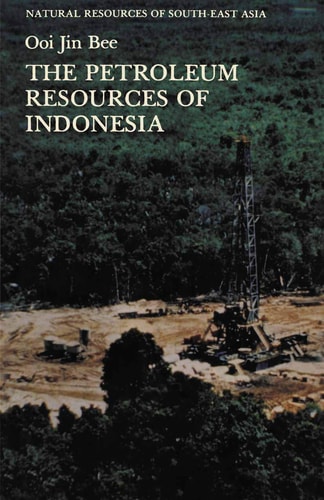
The Petroleum Resources of Indonesia
0
0
As an Amazon Associate and affiliate partner, Menrva Books earns from qualifying purchases. Learn more
Author Description
THE quadrupling of oil prices within a few months in late 1973 and early 1974 brought to an abrupt end the era of inexpensive oil. Since then the continuing increases in the price of oil traded in the international market and the higher prices of imports of manu factured goods have seriously disrupted the foreign exchange balances of many developing countries and forced them to replan their development programmes. The impact of high oil prices is felt in every country, whether developed or developing, and has brought to world attention the fact that not only are petroleum resources in limited supply and exhaustible but also that substitutes cannot be found easily or quickly. In a world faced with the certainty of declining supplies of petroleum there is widespread interest and concern among all the oil producing countries to evaluate the extent of their petroleum resources and to examine more closely the problems of their development, rates of depletion and methods of conservation. The present work reviews some of the above issues and problems in relation to Indonesia, an OPEC member, and the major oil producing country in South-East Asia. More specifically, it seeks to provide the reader with an overview of the petroleum resources of the country their nature, extent, distribution as well as the problems of their development.
Menrva's Summary
THE THESIS
This work investigates the economic and structural implications of the global oil crisis on Indonesia, a primary petroleum producer in South-East Asia. Ooi Jin Bee, a noted geographer specializing in the region, utilizes historical data and economic analysis to evaluate the sustainability of Indonesian oil reserves. The text argues that the transition away from inexpensive energy necessitates a rigorous re-evaluation of national development programs, resource depletion rates, and conservation strategies within the context of OPEC membership.
THE SCOPE MAP
What You Will Find
- Analysis of the impact of the 1973-1974 global oil price shocks on developing economies.
- Overview of the nature, extent, and geographical distribution of Indonesian petroleum resources.
- Examination of the challenges associated with the development and extraction of oil reserves.
- Discussion on the long-term implications of resource depletion and the necessity for conservation policies.
THE AUTHORITY PERSPECTIVE
Experts recognize this text as a foundational study for understanding the historical intersection of energy policy and economic development in South-East Asia. Readers frequently note the academic density of the prose, which provides a comprehensive baseline for evaluating the geopolitical significance of Indonesian natural resources during the mid-1970s.
Page Count:
272
Publication Date:
1982-06-30
Publisher:
Oxford University Press
ISBN-10:
0195825276
ISBN-13:
9780195825275
Economics
Indonesia
Natural Resources
Energy
Geography
Community Tags
Other Editions(4)


Similar Books




Reader Comments
Share Your Thoughts
No comments yet. Be the first to share your thoughts!