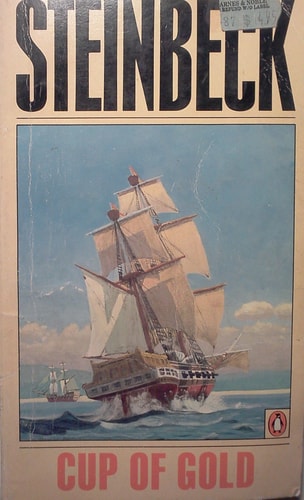
Cup of Gold: A Life of Sir Henry Morgan, Buccaneer, With Occasional Reference to History
0
0
As an Amazon Associate and affiliate partner, Menrva Books earns from qualifying purchases. Learn more
Author Description
A STANDOUT in the Steinbeck canon, Cup of Gold is edgy and adventurous, brash and distrustful of society, and sure to add a new dimension to the common perception of this all-American writer. Steinbeck's first novel and sole work of historical fiction contains themes that resonate throughout the author's prodigious body of work. From the mid-1650s through the 1660s, Henry Morgan, a pirate and outlaw of legendary viciousness, ruled the Spanish Main. He ravaged the coasts of Cuba and America, striking terror wherever he went. And he had two driving ambitions: to possess the beautiful woman called La Santa Roja, and to conquer Panama, the "cup of gold."
Menrva's Summary
THE PULSE
Driven by insatiable ambition and a desire for legendary status, Henry Morgan abandons his quiet life in Wales to seek fortune and infamy upon the high seas. Morgan navigates the brutal realities of seventeenth-century piracy, balancing his obsession with the enigmatic La Santa Roja against his strategic goal of sacking the wealthy city of Panama. The narrative follows his rise from a common sailor to a feared buccaneer, highlighting the psychological toll of his relentless pursuit of power. Steinbeck employs a third-person perspective that shifts between the romanticized allure of piracy and the harsh, often violent consequences of Morgan's choices.
INSIDE THE PAGES
- Exploration of the corrupting influence of unchecked ambition
- Vivid depictions of seventeenth-century naval warfare and coastal raids
- Contrast between the protagonist's internal desires and external actions
- Use of historical figures to anchor the fictionalized narrative
- Focus on the isolation inherent in a life of outlawry
- Examination of the social structures of the Spanish Main
- Integration of romantic obsession as a primary plot driver
- Stylistic experimentation characteristic of an early career work
THE COLLECTIVE ECHO
Readers and critics often view this work as a departure from the social realism that defines the author's later, more famous novels. Discussion frequently centers on the stylistic differences present in this early effort, noting a more romanticized and adventurous tone compared to his later focus on the American working class. Many observers highlight the book's importance in understanding the evolution of the author's thematic interests, particularly his early fascination with the psychology of power. While some find the pacing uneven, others appreciate the raw energy and the clear ambition behind the prose. The work remains a subject of interest for those seeking to map the full breadth of the author's literary development.
Page Count:
198
Publication Date:
1976-01-01
Publisher:
Viking Pr
ISBN-10:
0140042342
ISBN-13:
9780140042344
Adventure
Historical Fiction
Biographical fiction
Classic Literature
Pirate
Community Tags
Similar Books