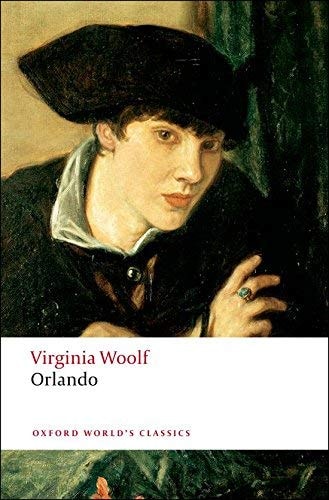
Orlando
0
0
As an Amazon Associate and affiliate partner, Menrva Books earns from qualifying purchases. Learn more
Author Description
He-for there could be no doubt about his sex, though the fashion of the time did something to disguise it-was in the act of slicing at the head of a Moor which swung from the rafters. It was the colour of an old football, and more or less the shape of one, save for the sunken cheeks and a strand or two of coarse, dry hair, like the hair of a coconut. Orlando's father, or perhaps his grandfather, had struck it from the shoulders of a vast Pagan who had started up under the moon in the barbarian fields of Africa; and now it swung, gently, perpetually, in the breeze which never ceased blowing through the attic rooms of the gigantic house of the lord who had slain him. Orlando's fathers had ridden in fields of asphodel, and stony fields, and fields watered by strange rivers, and they had struck many heads of many colours off many shoulders, and brought them back to hang from the rafters. So too would Orlando, he vowed. But since he was sixteen only, and too young to ride with them in Africa or France, he would steal away from his mother and the peacocks in the garden and go to his attic room and there lunge and plunge and slice the air with his blade. Sometimes he cut the cord so that the skull bumped on the floor and he had to string it up again, fastening it with some chivalry almost out of reach so that his enemy grinned at him through shrunk, black lips triumphantly.
Menrva's Summary
THE PULSE
The narrative follows the life of Orlando, a young nobleman who undergoes a mysterious transformation across several centuries of English history. Orlando begins as a sixteen-year-old boy in the Elizabethan era, obsessed with poetry and the martial traditions of his ancestors. As he matures, he encounters various historical figures and experiences a sudden change in gender, which forces him to navigate the shifting social expectations of the eighteenth, nineteenth, and twentieth centuries. The narrative framework utilizes a mock-biographical tone, blending historical fact with surreal, fantastical elements to examine the fluidity of identity and the constraints of societal roles.
INSIDE THE PAGES
- Mock-biographical narrative structure
- Satirical commentary on gender roles
- Exploration of the passage of time
- Stream of consciousness passages
- Meta-fictional reflections on the act of writing
- Vivid, descriptive prose style
- Historical settings ranging from the Elizabethan era to the 1920s
- Philosophical inquiries into the nature of the self
THE COLLECTIVE ECHO
Readers and critics frequently discuss the work as a playful subversion of the traditional biography format. Discussion often centers on the author's ability to maintain a consistent voice while shifting through vastly different historical periods. Many highlight the text's focus on the fluidity of gender and the limitations imposed by society on individual expression. The atmosphere is often described as whimsical yet intellectually rigorous, providing a unique perspective on the evolution of English culture. Readers appreciate the balance between the protagonist's internal development and the broader historical context provided throughout the narrative.
Page Count:
400
Publication Date:
1992-01-01
Publisher:
Oxford University Press España, S.A.
ISBN-10:
0192818252
ISBN-13:
9780192818256
Historical Fiction
Satire
Genre Fiction
Biographical fiction
Modernism
Historical
Classic Literature
Biographical
Community Tags
Similar Books